
Migrant workers sending money home, businesses paying international suppliers, and financial institutions settling cross-border trades all share the same pain: slow, expensive, and opaque international payments. XRP is being used right now — in production — to solve this problem at scale.
The $700 Billion Remittance Opportunity
The $700 Billion Remittance Opportunity

The global remittance market — money sent by workers living abroad back to their home countries — exceeded $700 billion in 2024. The World Bank reports that the average cost of sending $200 internationally is 6.2%, meaning migrants lose over $43 billion per year to fees alone.
XRP's microtransaction capabilities make it ideally suited to this market, where transactions are frequent, relatively small, and fee-sensitivity is acute.
- ✓Global remittances: $700B+ annually and growing
- ✓Average global remittance fee: 6.2% per transaction
- ✓Migrant fee losses: $43 billion per year
- ✓XRP transfer cost: less than $0.001
- ✓XRP settlement time: 3–5 seconds
- ✓Potential fee savings with XRP: up to 99.9%
How Ripple's On-Demand Liquidity (ODL) Works
How Ripple's On-Demand Liquidity (ODL) Works
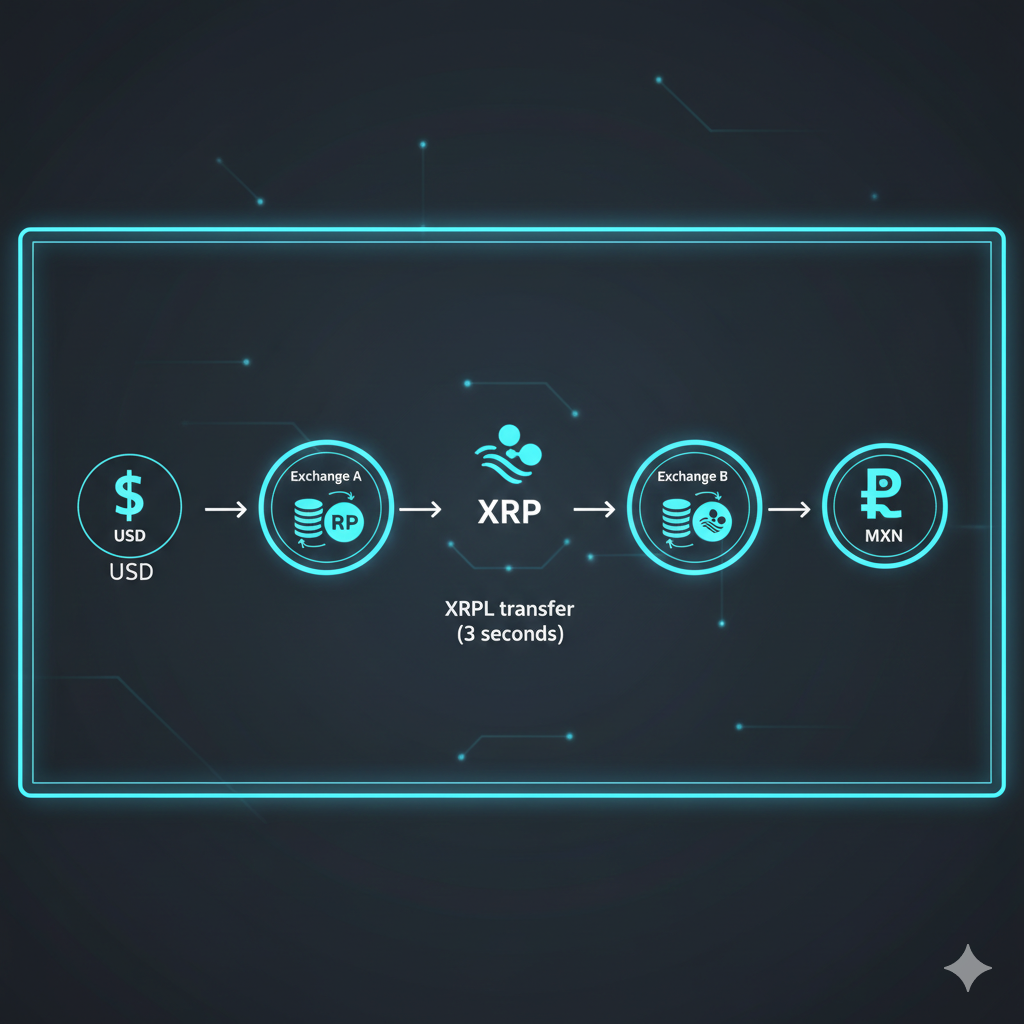
Step 1: Convert to XRP
The sending institution purchases XRP on a local crypto exchange in the source country (e.g., USD to XRP in the United States).
Step 2: Transfer Over XRPL
The XRP is transmitted over the XRP Ledger to the destination in 3–5 seconds. No correspondent banks, no delays, full transparency.
Step 3: Convert to Local Currency
The receiving institution immediately converts the XRP to local currency (e.g., XRP to MXN in Mexico) via a local exchange, crediting the recipient's account.
XRP Payments FAQ
Be Part of the XRP Ecosystem
XRP is actively used in the world's payment infrastructure. Get exposure to this asset while earning daily returns on MineXrpOnline — the XRP cloud mining platform.
Join MineXrpOnline