XRP is one of the most misunderstood yet most powerful assets in the entire cryptocurrency market. Created by Ripple Labs, XRP is designed to do one thing exceptionally well: move value across borders instantly and at near-zero cost. While Bitcoin pioneers the concept of digital money and Ethereum enables decentralized applications, XRP is purpose-built for the $150 trillion global payments industry.
What Is XRP? A Simple Explanation
What Is XRP? A Simple Explanation

XRP is the native digital asset of the XRP Ledger (XRPL), an open-source, decentralized blockchain created in 2012 by Jed McCaleb, Arthur Britto, and David Schwartz — later adopted and promoted by Ripple Labs.
Unlike Bitcoin, XRP was not designed as a store of value. Its primary purpose is as a bridge currency — a neutral, ultra-liquid asset that can be used to facilitate real-time gross settlements between any two currencies, eliminating the need for pre-funded nostro accounts.
A single XRP transaction settles in 3 to 5 seconds, costs less than $0.001 in fees, and the network can process up to 1,500 transactions per second — making it one of the fastest and most scalable blockchain networks in existence.
- ✓Created in 2012 — older than Ethereum by 3 years
- ✓Transaction confirmation: 3–5 seconds
- ✓Transaction fee: less than $0.001
- ✓Throughput: up to 1,500 TPS
- ✓Total supply: 100 billion XRP (pre-mined)
- ✓Energy consumption: 120,000x less than Bitcoin
XRP vs SWIFT: Why Banks Are Switching
XRP vs SWIFT: Why Banks Are Switching
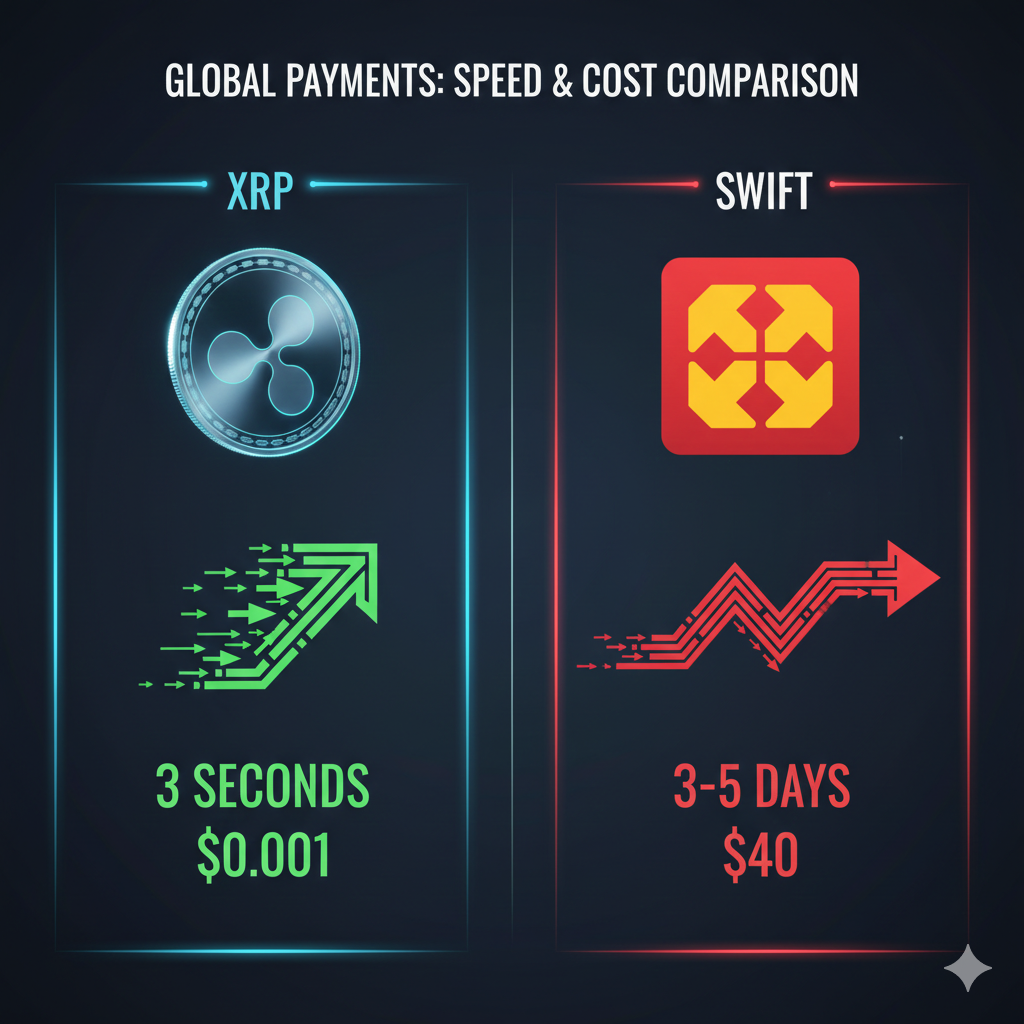
SWIFT, the traditional international payment network, was built in 1973. A SWIFT transfer can take 3 to 5 business days, involve up to 5 intermediary banks, and rack up fees of $20 to $50 per transaction.
XRP solves all of these problems simultaneously. With Ripple's On-Demand Liquidity (ODL) product — powered by XRP — financial institutions can send any currency to any destination in the world in seconds, without pre-funding accounts in each currency corridor.
More than 300 financial institutions in 45+ countries have already integrated Ripple's payment technology, including Santander, SBI Holdings, PNC Bank, and dozens of central banks exploring CBDC bridges.
- ✓SWIFT: 3–5 days, $20–$50 per transfer
- ✓XRP (ODL): 3–5 seconds, under $0.001
- ✓300+ financial institutions using Ripple technology
- ✓Active in payment corridors: USD↔MXN, USD↔PHP, USD↔AUD
- ✓No pre-funded accounts needed with ODL
How to Invest in XRP: A Practical Guide
How to Invest in XRP: A Practical Guide
Investing in XRP is straightforward through any major cryptocurrency exchange. The most popular platforms supporting XRP include Coinbase, Kraken, Binance, and Bitstamp.
Beyond direct purchase, you can also generate passive income from XRP through cloud mining platforms like MineXrpOnline, which offer daily returns with XRP contracts starting from just $15.
Step 1: Choose a Regulated Exchange
Select a regulated, reputable exchange that supports XRP trading in your country. Check for features like two-factor authentication (2FA), proof of reserves, and insurance on digital assets.
Step 2: Complete KYC Verification
Most exchanges require identity verification (KYC) before you can buy or trade. Prepare your government-issued ID, a selfie, and proof of address.
Step 3: Fund Your Account and Buy XRP
Deposit fiat currency (USD, EUR, etc.) via bank transfer or card, then purchase XRP at market or limit price. You can buy fractional amounts — no need to buy whole XRP coins.
Step 4: Secure Your XRP
For amounts worth protecting, transfer XRP to a personal wallet. The official XUMM wallet (now Xaman) is purpose-built for the XRP Ledger and is free to use.
Frequently Asked Questions About XRP
Start Generating Passive Income with XRP Today
You don't need to be a crypto expert to benefit from XRP. MineXrpOnline offers cloud mining contracts that generate daily XRP returns directly to your account. Start with as little as $15 and watch your XRP balance grow every day.
Start Mining XRP