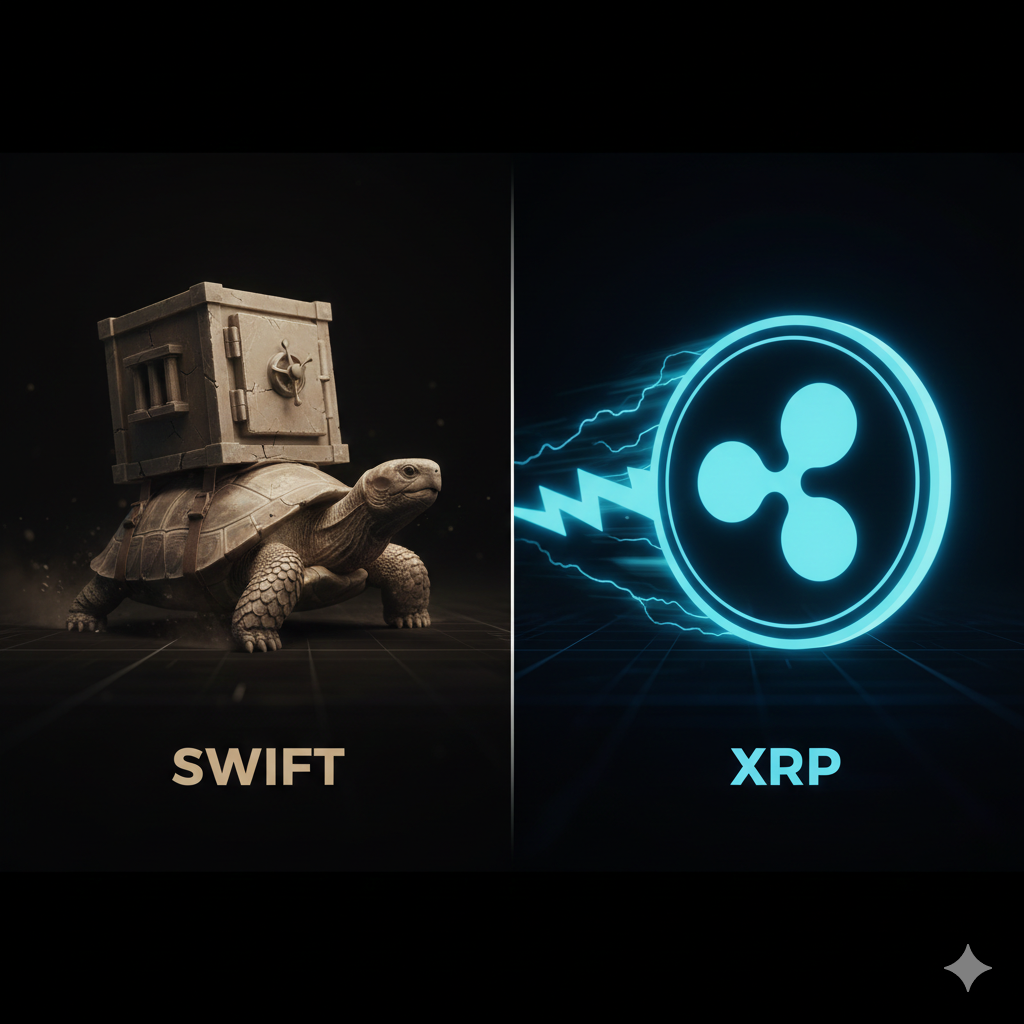
Every time someone sends money internationally through a bank, SWIFT — the Society for Worldwide Interbank Financial Telecommunication — is almost certainly involved. For over 50 years, SWIFT has been the backbone of global finance. But its age is showing. XRP and Ripple's payment technology are now offering a radically faster, cheaper, and more transparent alternative.
The Problem with Traditional International Payments
The Problem with Traditional International Payments

When you send $1,000 from the United States to the Philippines via a traditional bank wire, the actual journey of those funds is surprisingly complex. SWIFT doesn't move money — it sends messages between banks instructing them to debit and credit accounts.
This message-based system requires a chain of correspondent banks, each holding pre-funded accounts in the target currency (called nostro/vostro accounts). The process is opaque, slow, and expensive.
Globally, financial institutions tie up over $10 trillion in locked capital just to maintain these pre-funded nostro accounts — capital that generates zero return and exists purely to support an antiquated correspondent banking model.
- ✓Average SWIFT transfer time: 1–5 business days
- ✓Average international wire fee: $20–$50
- ✓Up to 5 intermediary banks per transaction
- ✓$10+ trillion in capital locked in nostro/vostro accounts globally
- ✓No real-time tracking of payment status
- ✓High failure and error rates causing 6–8% additional processing costs
How XRP Solves the Correspondent Banking Problem
How XRP Solves the Correspondent Banking Problem

Ripple's On-Demand Liquidity (ODL) solution uses XRP as a bridge currency. Here's how it works: a bank in the US converts USD to XRP, transmits it instantly over the XRP Ledger, and the recipient bank in the Philippines converts that XRP back to PHP — all in under 5 seconds.
This eliminates the need for pre-funded accounts in each currency corridor entirely. Liquidity is sourced on-demand from XRP markets, making the system dramatically more capital-efficient.
ODL is already processing billions of dollars in payments per year and is live in corridors including USD to MXN, USD to PHP, USD to AUD, and expanding.
FAQs: XRP vs SWIFT
Benefit From XRP's Growing Adoption
As XRP's utility in global finance grows, so does the opportunity for investors. Join MineXrpOnline and start earning daily returns in XRP — the digital asset being adopted by hundreds of financial institutions worldwide.
Earn Daily XRP Returns