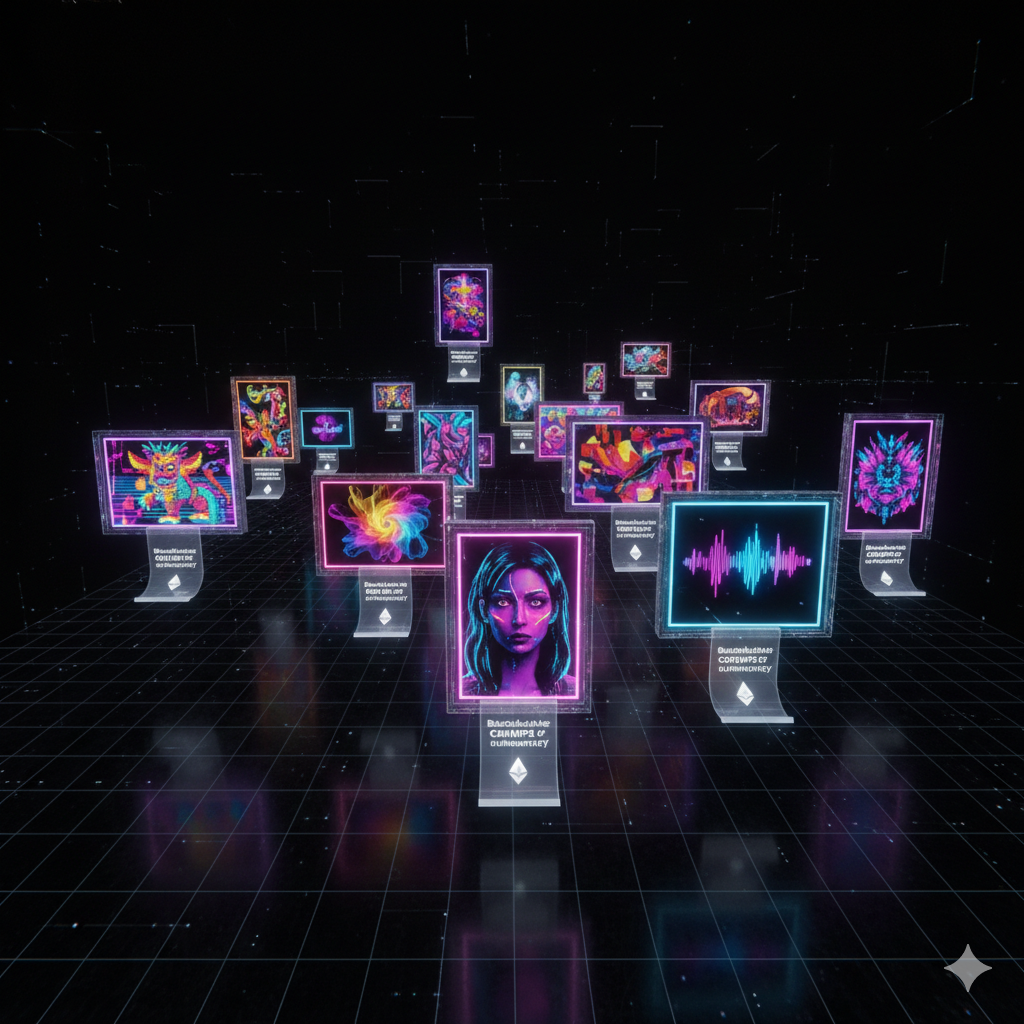
Non-Fungible Tokens (NFTs) are unique digital assets stored on a blockchain. While the 2021 NFT hype cycle has cooled, NFTs have found sustainable applications in art, gaming, music rights, ticketing, and identity verification. In 2026, creating an NFT is straightforward — but creating one that sells requires understanding the ecosystem, the costs involved, and effective marketing. This guide covers the entire process from wallet setup to your first sale.
Understanding NFT Standards by Blockchain
Different blockchains use different NFT standards. Ethereum uses ERC-721 (unique tokens) and ERC-1155 (semi-fungible tokens useful for gaming items with quantities). Solana uses the Metaplex NFT standard. The XRP Ledger uses the XLS-20 NFT standard, launched in 2022 after a community vote. Each has different tradeoffs in cost, speed, and ecosystem size.
Ethereum has the largest NFT ecosystem (OpenSea, Blur, Foundation) and the most established collector community, but gas fees on mainnet can make minting expensive. Ethereum L2s (Base, Polygon) offer cheaper minting while still accessing Ethereum's collector base. Solana offers sub-cent minting fees with a vibrant gaming NFT scene on Magic Eden.
XRPL NFTs are particularly interesting for XRP holders — creating an NFT collection on XRPL costs a fraction of a cent, with built-in royalty enforcement at the protocol level (unlike Ethereum where royalty enforcement broke down). XRPL's speed and low cost make it ideal for high-volume NFT applications like gaming items.
- ✓Ethereum ERC-721: most established ecosystem, higher gas fees on mainnet
- ✓Ethereum L2 (Base, Polygon): cheap minting, access to Ethereum collector community
- ✓Solana: sub-cent minting, major gaming NFT scene on Magic Eden
- ✓XRPL XLS-20: cheapest minting, protocol-level royalty enforcement
- ✓Choose blockchain based on: target audience, cost tolerance, asset type
- ✓Cross-chain bridges exist but add complexity — choose one chain and commit
Step 1: Setting Up Your Wallet
For Ethereum/Base/Polygon NFTs: Install MetaMask as a browser extension. Create a new wallet and securely store your 12-word seed phrase offline. Fund your wallet with ETH (for Ethereum mainnet) or ETH on the relevant L2 network. For Polygon, you'll use ETH or MATIC/POL.
For Solana NFTs: Install Phantom Wallet or Backpack. Fund with SOL for transaction fees. Solana minting costs are typically 0.01–0.05 SOL per NFT, making it one of the cheapest options for large collections.
For XRPL NFTs: Install Xaman Wallet (formerly XUMM) or Crossmark. You'll need XRP in your wallet — the XRP Ledger requires a 10 XRP base reserve for each account, and NFT minting costs fractions of an XRP. Xaman has the best user experience for XRPL NFTs.
- ✓Ethereum: MetaMask browser extension, fund with ETH
- ✓Solana: Phantom or Backpack wallet, fund with SOL
- ✓XRPL: Xaman (XUMM) wallet, fund with XRP (10 XRP base reserve required)
- ✓NEVER screenshot your seed phrase — write it on paper and store safely offline
- ✓Test with small amounts first before large transactions
- ✓Hardware wallet (Ledger) recommended for high-value collections
Step 2: Creating Your NFT Artwork or Asset
NFTs can represent images (JPEG, PNG, SVG), videos (MP4), audio files (MP3), 3D models (GLB), interactive HTML, or virtually any digital file. Most marketplaces recommend images at minimum 1000x1000 pixels, videos at 1080p or higher. File size limits vary by marketplace — OpenSea supports up to 100MB.
AI-generated art using Midjourney, DALL-E, or Stable Diffusion has become common for NFT collections. Note that copyright for AI art is an evolving legal area — ensure you understand the terms of the AI tool you use and disclose AI assistance to buyers.
For generative collections (10,000-piece 'PFP' projects): traits are defined separately (backgrounds, characters, accessories) and programmatic tools (HashLips, Bueno) combine them into unique combinations. The metadata (name, description, attributes) is typically stored on IPFS (decentralized storage) to ensure permanence.
- ✓Supported formats: images (PNG, JPEG, SVG, GIF), video (MP4), audio (MP3), 3D (GLB)
- ✓Recommended: 1000x1000px minimum for images, 1080p for video
- ✓IPFS storage: use Pinata or NFT.Storage for decentralized metadata hosting
- ✓AI art: legal for personal use, copyright ownership varies by jurisdiction
- ✓Generative collections: HashLips or Bueno for 10,000-piece programmatic generation
- ✓Rarity traits: common, uncommon, rare, legendary tiers drive collector interest
Step 3: Minting Your NFT
On OpenSea (Ethereum/Base/Polygon): Click 'Create,' upload your file, add name/description/traits, select blockchain (Base is cheapest for single items), and click 'Create.' OpenSea uses 'lazy minting' — the NFT isn't actually written to the blockchain until the first sale, saving you upfront gas fees.
On Solana via Magic Eden: Create a collection on Magic Eden, upload assets, configure royalties (typically 5–10%), and launch. Candy Machine (by Metaplex) is the developer-level tool for large collections. Single NFTs can be minted via Tensor or Metaplex Studio.
On XRPL: Use XLS-20 compatible tools like NFT-Devnet (for testing) or the Xaman wallet's built-in NFT features. XRPL NFTs include automatic royalty enforcement via the TransferFee field — set once and enforced by the protocol forever, unlike Ethereum where royalties can be bypassed.
- ✓OpenSea lazy minting: free to list, gas paid only when sold (on Base/Polygon)
- ✓Magic Eden: easy Solana minting interface with marketing exposure
- ✓XRPL TransferFee: protocol-enforced royalty up to 50% (set in basis points)
- ✓Royalty recommendations: 5–10% for art, 2.5% for gaming items
- ✓Metadata: name, description, external link, traits all matter for discovery
- ✓Test before launch: use testnets (Goerli, Solana devnet) to verify your setup
Step 4: Marketing and Selling Your NFTs
The NFT market is extremely competitive — there are millions of NFTs and most don't sell without marketing. Building a community before your mint significantly increases success. Twitter/X, Discord, Instagram, and TikTok are the primary NFT marketing channels. Consistent posting, engaging with established NFT communities, and collaborating with other creators build the audience that converts to buyers.
Pricing strategy matters enormously. Setting a floor price too high means no sales; too low means leaving money on the table. Research comparable collections in your style and category. For single pieces, auction format often extracts more value than fixed pricing if you have an audience.
Marketplace selection affects visibility: OpenSea has the most visitors, Blur aggregates listings from multiple sources, Foundation is curated and higher-prestige for fine digital art, and Zora allows fully on-chain open editions. For Solana, Magic Eden is dominant.
- ✓Community first: build Discord/Twitter following before minting for better results
- ✓Engage authentically: participate in NFT communities before promoting your own work
- ✓Auctions vs fixed price: auctions work better with an existing audience
- ✓OpenSea: highest traffic; Blur: best for floor trading; Foundation: curated art prestige
- ✓Collab and whitelist: offer early access/discounts to community members
- ✓Secondary sales strategy: set royalty rates and promote secondary market activity
Frequently Asked Questions About Creating NFTs
Build on the XRP Ledger's NFT Ecosystem
Creating NFTs on the XRP Ledger costs fractions of a cent with enforced royalties. While you build your NFT collection, stack XRP daily through MineXrpOnline's cloud mining — the more XRP you hold, the more you can invest in growing your XRPL ecosystem presence.
Earn XRP for Your XRPL NFT Journey