The Fibonacci sequence (1, 1, 2, 3, 5, 8, 13, 21...) appears throughout nature: in spiral galaxies, flower petals, and seashells. The ratios between consecutive Fibonacci numbers converge to key proportions (0.618, 0.382, 0.236) that traders have observed appearing at significant price levels in financial markets for over 50 years.
How to Draw Fibonacci Retracements
How to Draw Fibonacci Retracements
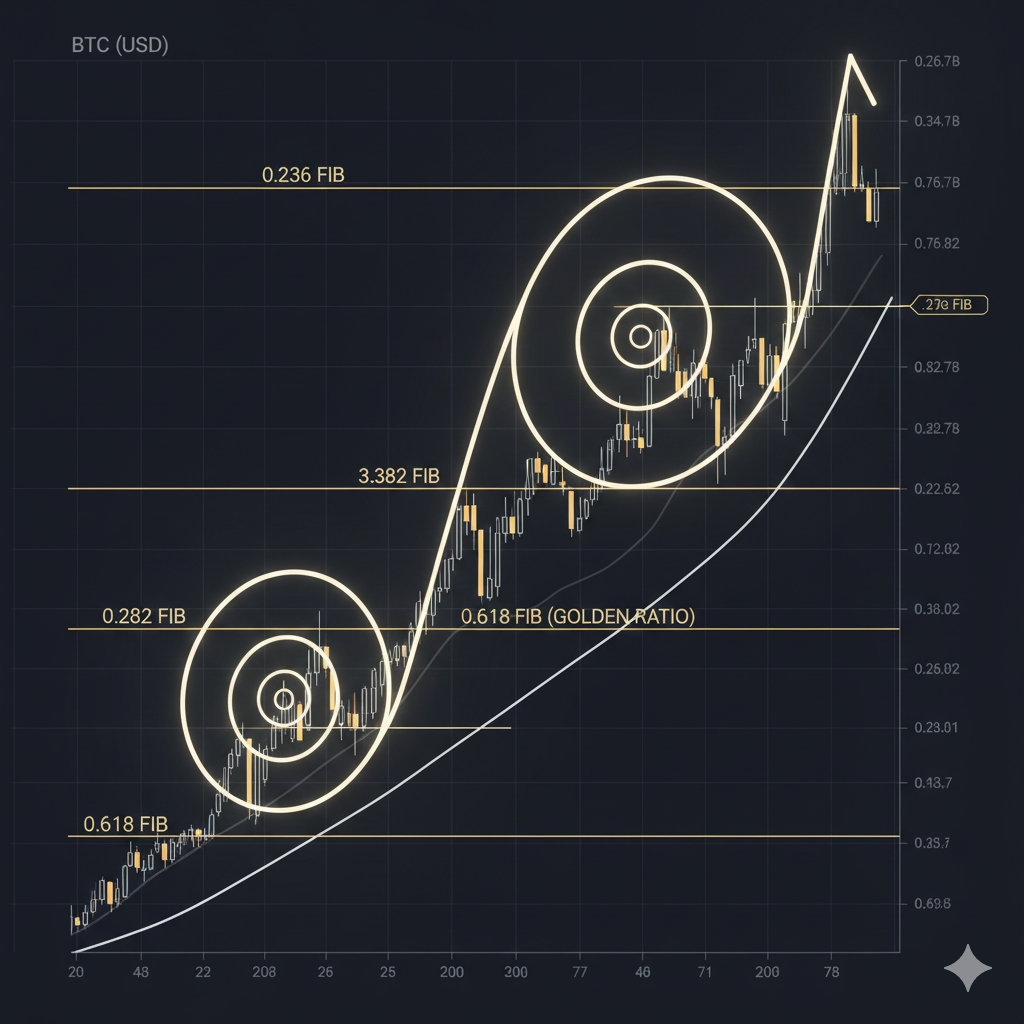
In an uptrend: draw the Fibonacci tool from the swing low to the swing high. The retracement levels appear between these two points. In a downtrend: draw from swing high to swing low and the extension levels project above the high.
The most acted-upon levels in crypto are: 23.6% (shallow retracement, strong trend), 38.2% (moderate retracement), 50% (psychological midpoint — not in the strict Fibonacci sequence but universally watched), 61.8% (the 'golden ratio' retracement — most significant), and 78.6% (deep retracement, near total trend reversal).
Bitcoin Fibonacci: Real Examples
Bitcoin Fibonacci: Real Examples
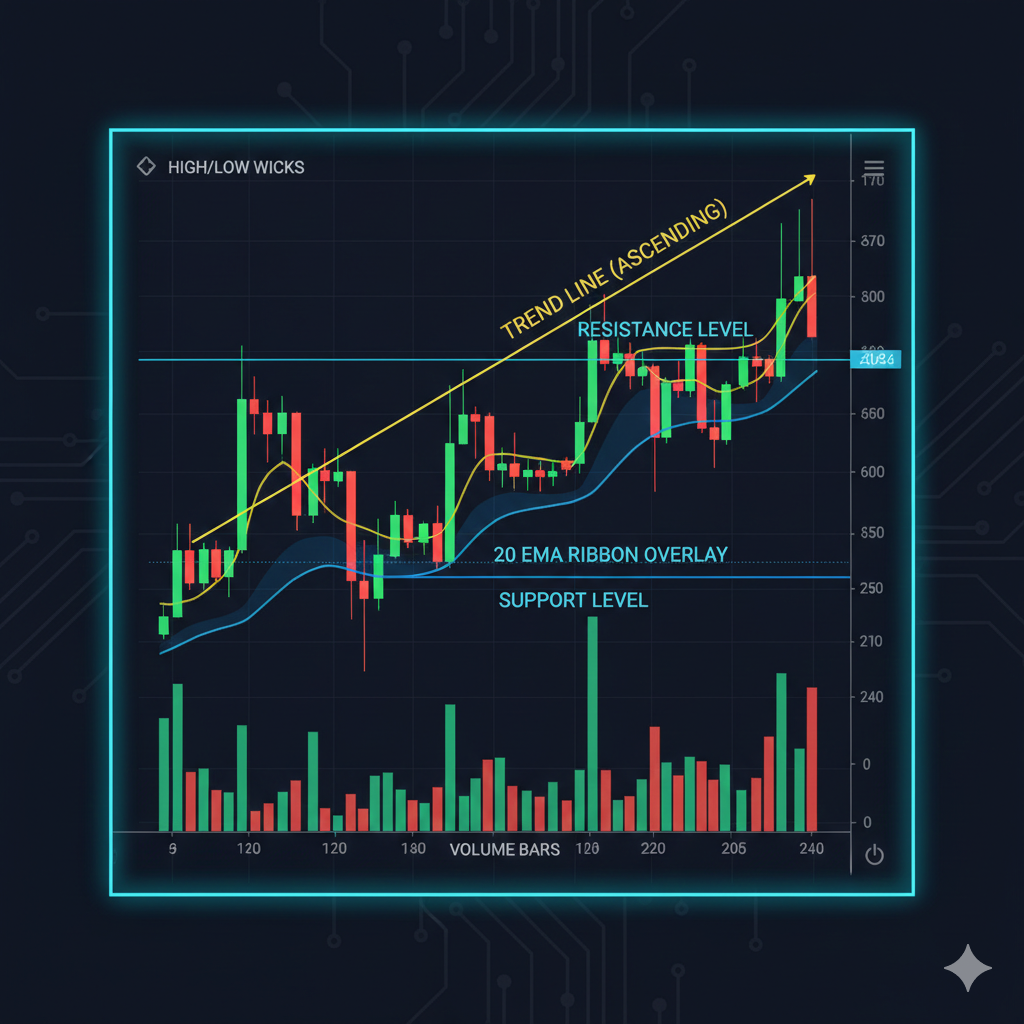
- ✓Bitcoin historically respects 61.8% retracement as primary buy zone in bull cycles
- ✓The 38.2% fib level often acts as resistance during recoveries in downtrends
- ✓XRP repeatedly found support at 0.618 fib retracements in its major cycles
- ✓Fibonacci levels work best when aligned with other support/resistance levels
- ✓Always draw from the most significant recent swing high to swing low (or vice versa)
Fibonacci FAQs
No Fibonacci Analysis Needed for Mining Returns
MineXrpOnline cloud mining pays you daily XRP regardless of where Fibonacci levels sit on the chart. Build your position with mathematical certainty.
Start Mining