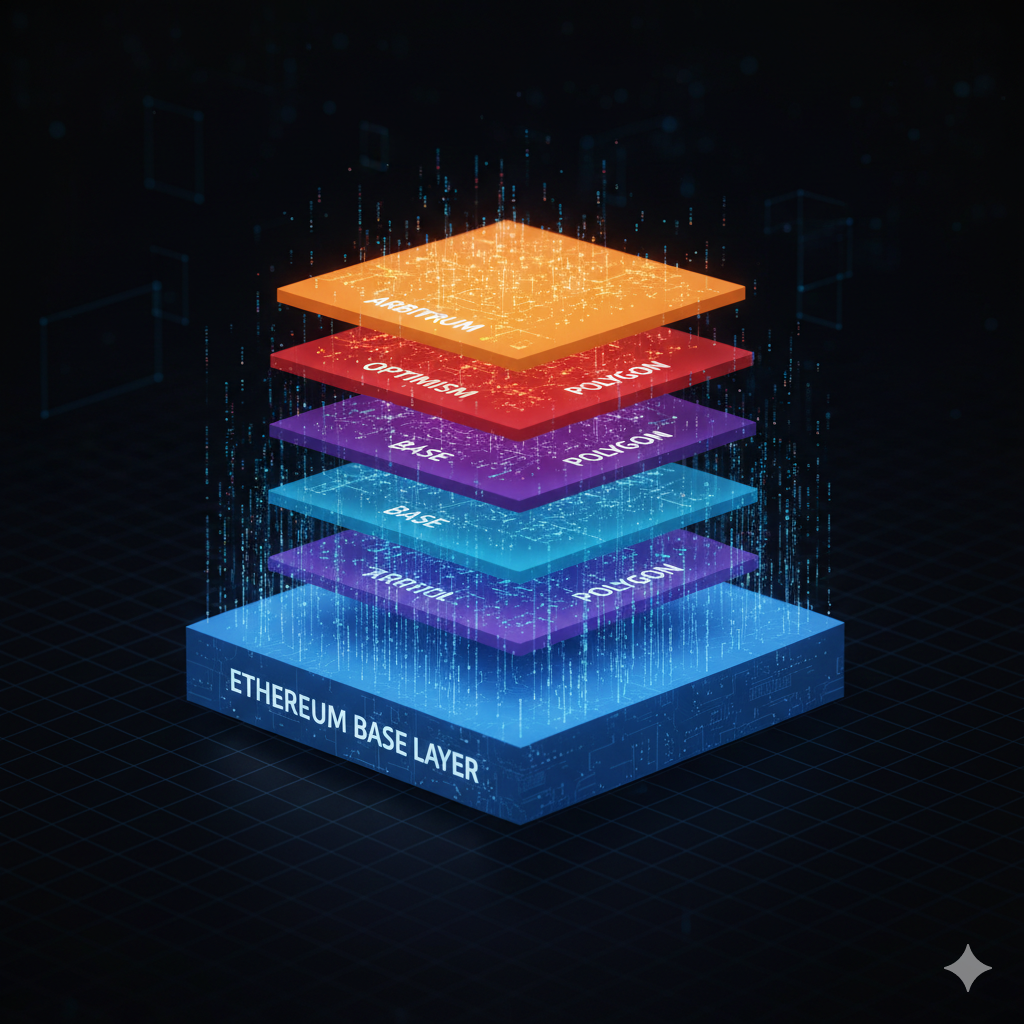
Ethereum's biggest weakness is cost. During peak demand, a simple token swap can cost $50 in gas fees. Layer 2 (L2) networks solve this by moving transaction execution off the main chain while posting compressed proofs or data back to Ethereum for security. The result: 10–1000x cheaper transactions with Ethereum-level security.
Optimistic Rollups vs ZK-Rollups
Optimistic Rollups vs ZK-Rollups
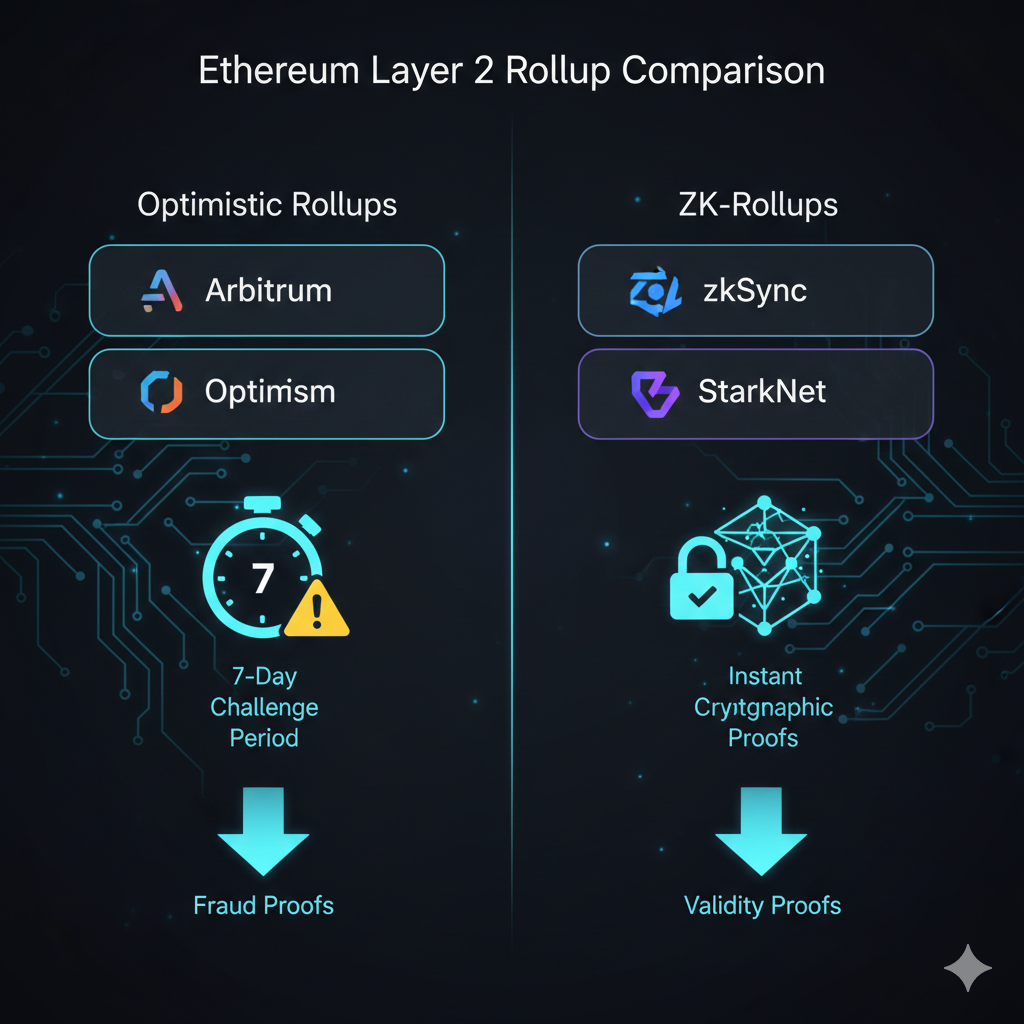
Optimistic Rollups (Arbitrum, Optimism, Base)
Assume transactions are valid by default ('optimistic'). Anyone can challenge a transaction during a 7-day window. This makes them EVM-compatible and easy to deploy existing Ethereum dApps onto. Most popular L2s today use this approach.
ZK-Rollups (zkSync, StarkNet, Scroll)
Use cryptographic proofs (zero-knowledge proofs) to mathematically verify each batch of transactions. More complex to build but offer instant finality and superior security. The long-term future of L2 scaling according to most Ethereum researchers.
L2 Network Comparison: Which Should You Use?
L2 Network Comparison: Which Should You Use?
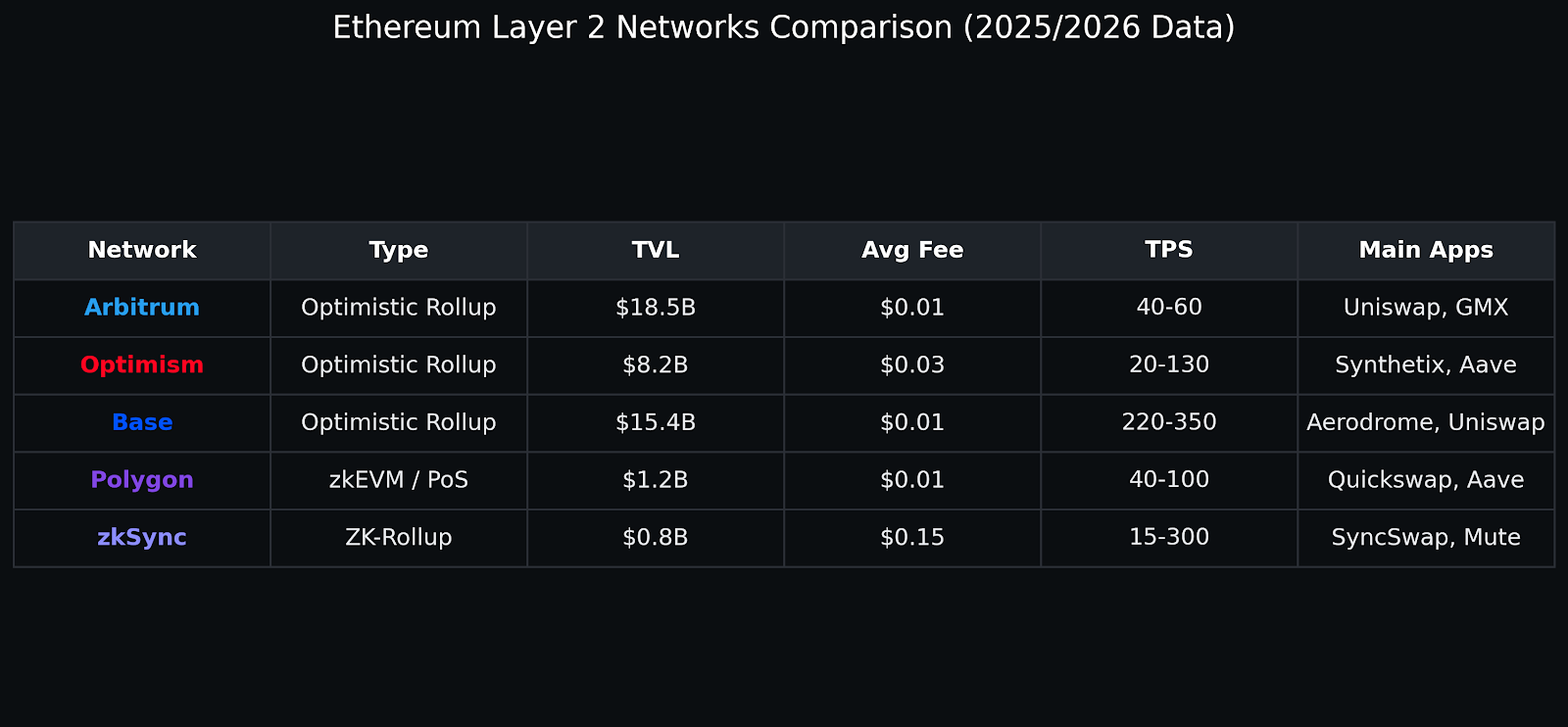
- ✓Arbitrum: highest TVL L2, best for DeFi (GMX, Camelot, Radiant)
- ✓Optimism / Base: best for Coinbase users and Base-native apps
- ✓Polygon: most widely supported by apps and games
- ✓zkSync Era: fastest growing ZK-rollup with growing DeFi ecosystem
- ✓All: under $0.01 average transaction fee, 1–5 second confirmation
Layer 2 FAQs
Low-Cost Crypto Returns Are Possible
Layer 2 made Ethereum cheap. MineXrpOnline makes XRP accumulation effortless. Start earning daily XRP returns without complex DeFi navigation.
Start Earning XRP