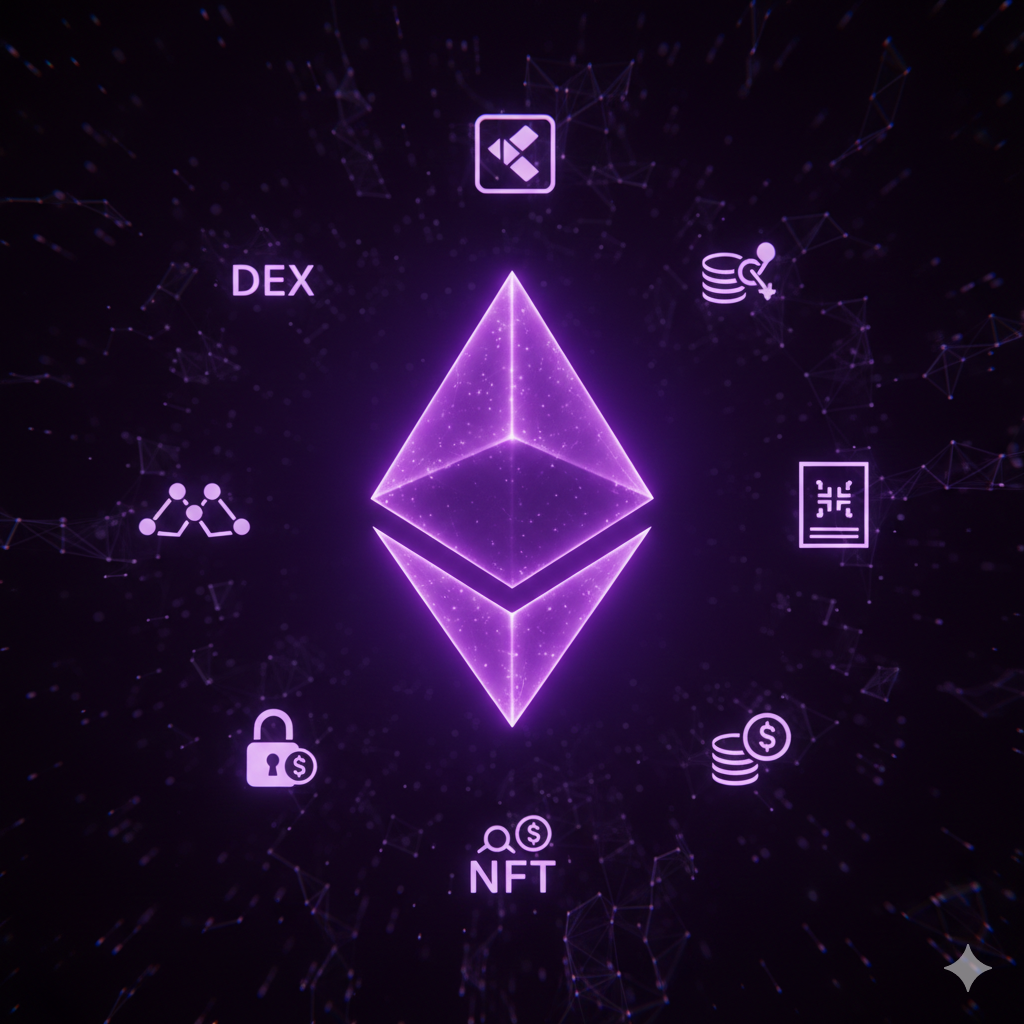
If Bitcoin is digital gold, Ethereum is digital infrastructure. Launched in 2015 by Vitalik Buterin, Ethereum was the blockchain that proved programmability was possible — kickstarting an ecosystem of decentralized applications (dApps) worth hundreds of billions of dollars.
What Makes Ethereum Different from Bitcoin
What Makes Ethereum Different from Bitcoin
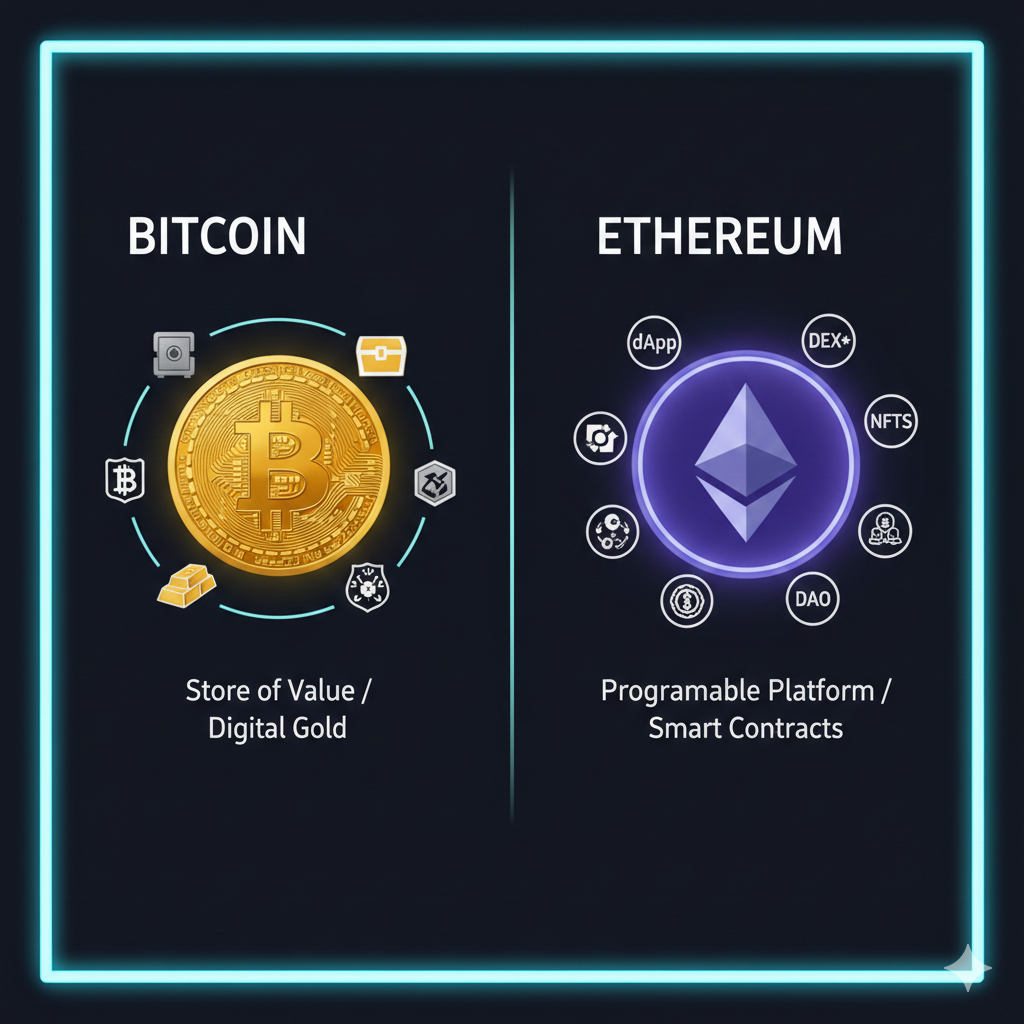
Bitcoin is intentionally limited in functionality — its simplicity is a security feature. Ethereum introduces the Ethereum Virtual Machine (EVM), a Turing-complete computing environment that allows developers to write and deploy self-executing code called smart contracts.
This one innovation — programmable money — unlocked an entirely new industry. DeFi protocols on Ethereum manage over $50 billion in assets. NFT sales have generated tens of billions in artist revenue. DAOs govern billion-dollar treasuries using ETH-based governance tokens.
- ✓Smart contracts: code that executes automatically when conditions are met
- ✓EVM: any computation Bitcoin cannot do, Ethereum can
- ✓No supply cap: ETH issuance is managed by staking rewards post-Merge
- ✓EIP-1559: burn mechanism making ETH deflationary in high-activity periods
- ✓Proof-of-Stake since September 2022 — 99.95% less energy than PoW
Ethereum 2.0 and The Merge: What Changed
Ethereum 2.0 and The Merge: What Changed
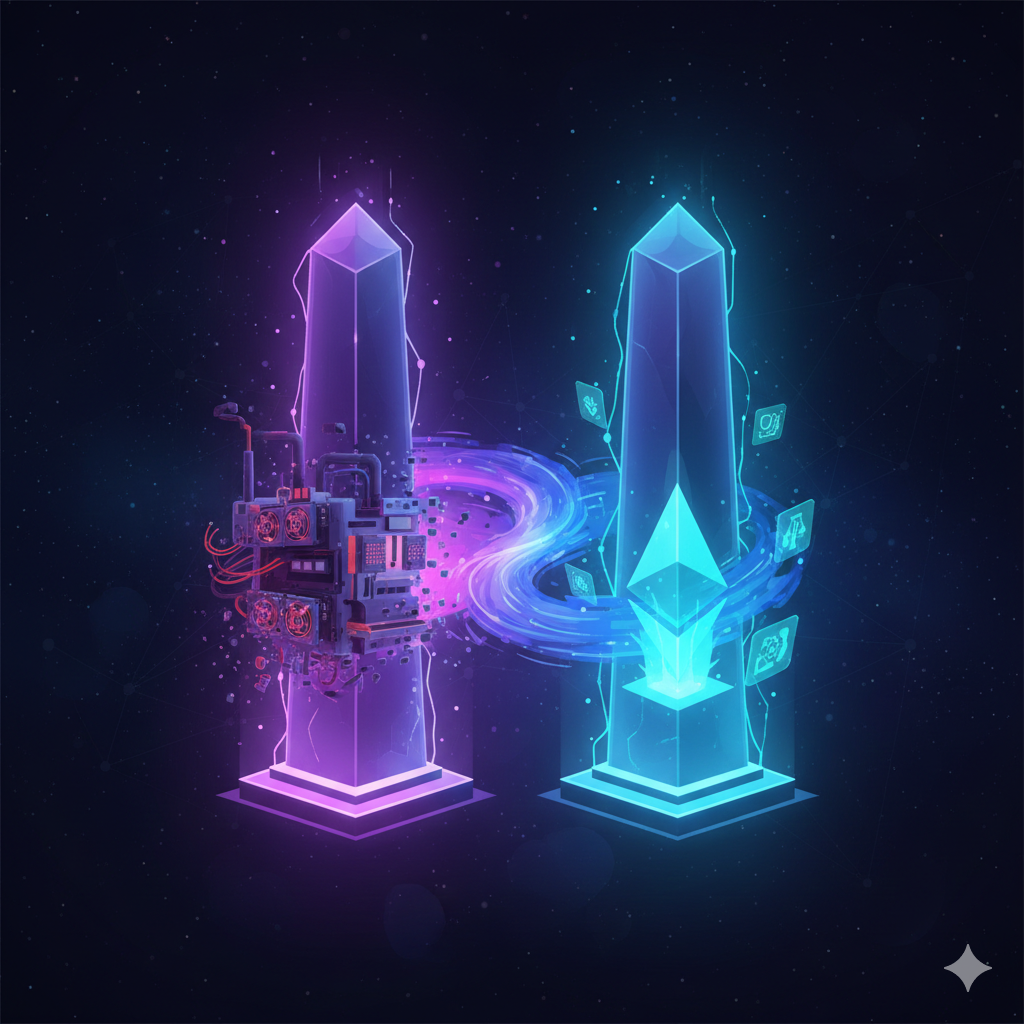
In September 2022, Ethereum completed 'The Merge' — transitioning from energy-intensive Proof-of-Work mining to Proof-of-Stake consensus. This eliminated Ethereum's environmental impact and changed its economic model: validators stake 32 ETH to earn rewards instead of miners competing computationally.
The Merge eliminated miner sell pressure (miners constantly sell ETH to pay electricity bills). Combined with EIP-1559 burning base fees, Ethereum now has periods of net-deflationary supply — when network activity is high, more ETH is burned than created.
Ethereum Layer 2: Cheap and Fast ETH Transactions
Ethereum Layer 2: Cheap and Fast ETH Transactions
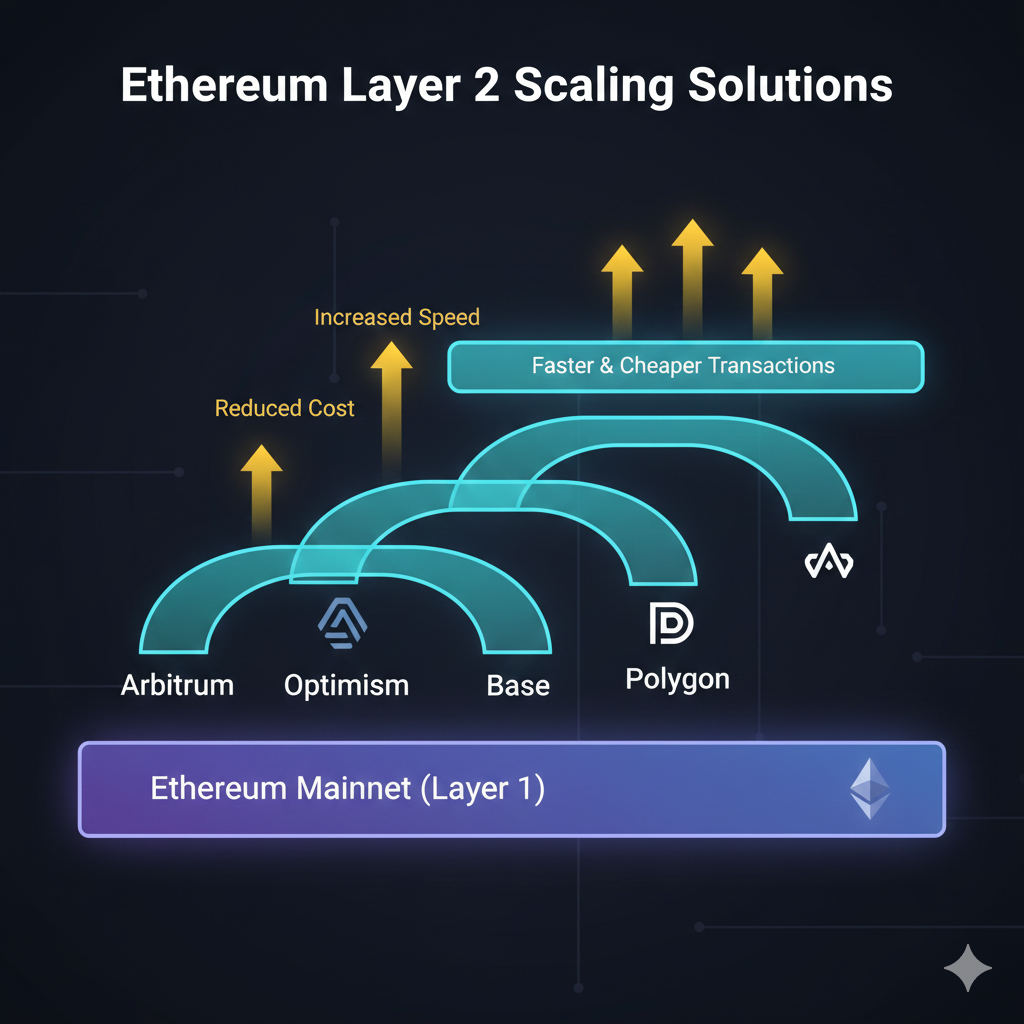
Ethereum mainnet transactions can cost $5–$50 during peak congestion. Layer 2 networks solve this by processing transactions off-chain and batching them to mainnet. Networks like Arbitrum, Optimism, Polygon, and Base offer ETH transactions for under $0.01 with 1–5 second finality.
- ✓Arbitrum: largest L2 by TVL, EVM-compatible, <$0.01 fees
- ✓Optimism: fast finality, Coinbase's Base is built on OP Stack
- ✓Polygon: high speed, widely supported by major apps
- ✓zkSync / StarkNet: zero-knowledge proofs for maximum security and scalability
Ethereum FAQs
Build a Multi-Asset Crypto Portfolio
Ethereum, Bitcoin, and XRP each play a distinct role in a well-rounded crypto portfolio. While you explore ETH, also build your XRP position with MineXrpOnline's daily cloud mining returns.
Start Earning XRP