
A smart contract is a program stored on a blockchain that runs automatically when predetermined conditions are satisfied. Once deployed, no one — not even the creator — can stop or modify it. This 'trustless' quality is what makes smart contracts revolutionary: you don't have to trust the other party, only the code.
How Smart Contracts Work: Step by Step
How Smart Contracts Work: Step by Step
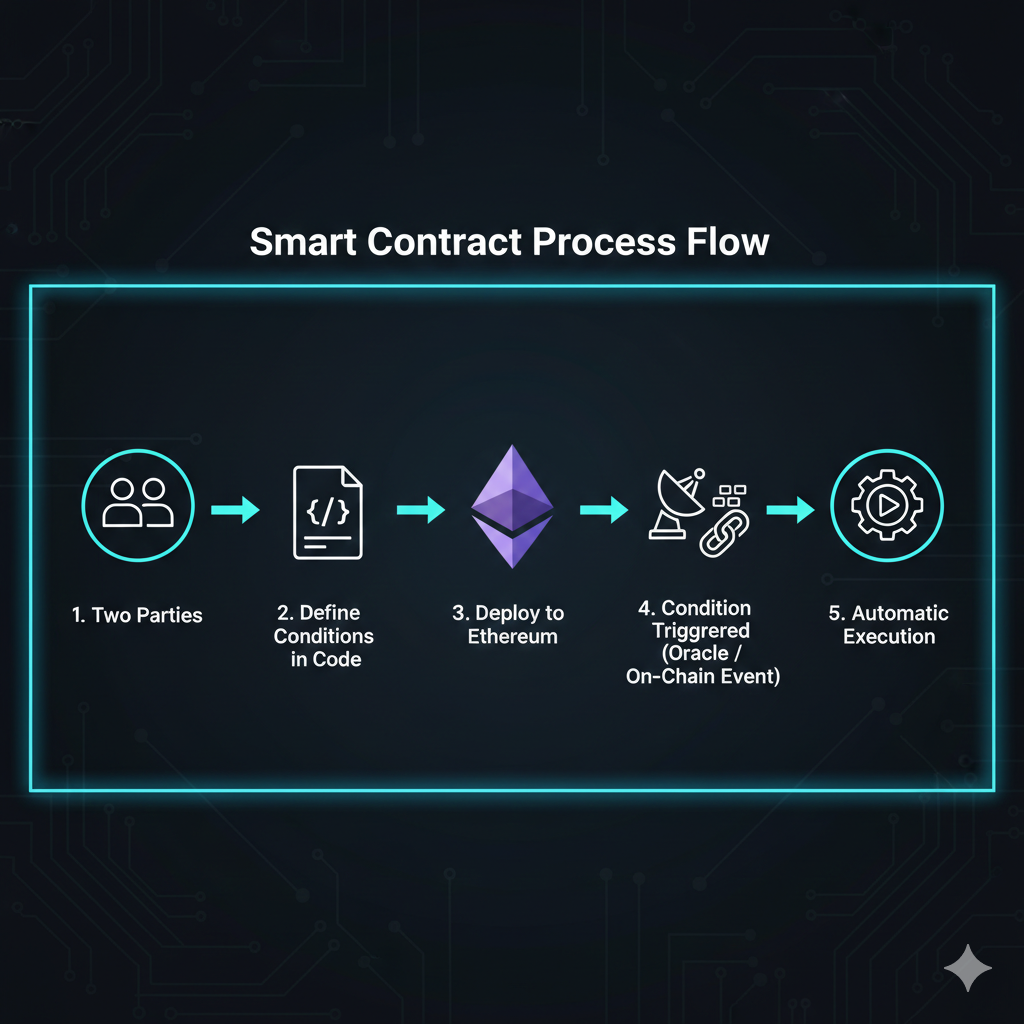
Think of a smart contract like a vending machine: you put money in, press the button, and the machine automatically delivers your product — no cashier needed, no discretion, just code. The same logic applies when two parties agree to exchange assets conditionally.
A developer writes the contract in Solidity (for Ethereum) or Rust (for Solana), deploys it to the blockchain, and it exists permanently. Any user can trigger its functions by sending transactions with the appropriate parameters.
- ✓Written in Solidity (Ethereum), Rust (Solana), or custom languages
- ✓Deployed once; cannot be changed by anyone (unless upgradeability is built in)
- ✓Executed by all nodes simultaneously — no single point of failure
- ✓Cannot be censored or stopped once conditions are met
- ✓Transparent: code is publicly readable on block explorers
Real-World Smart Contract Use Cases
Real-World Smart Contract Use Cases
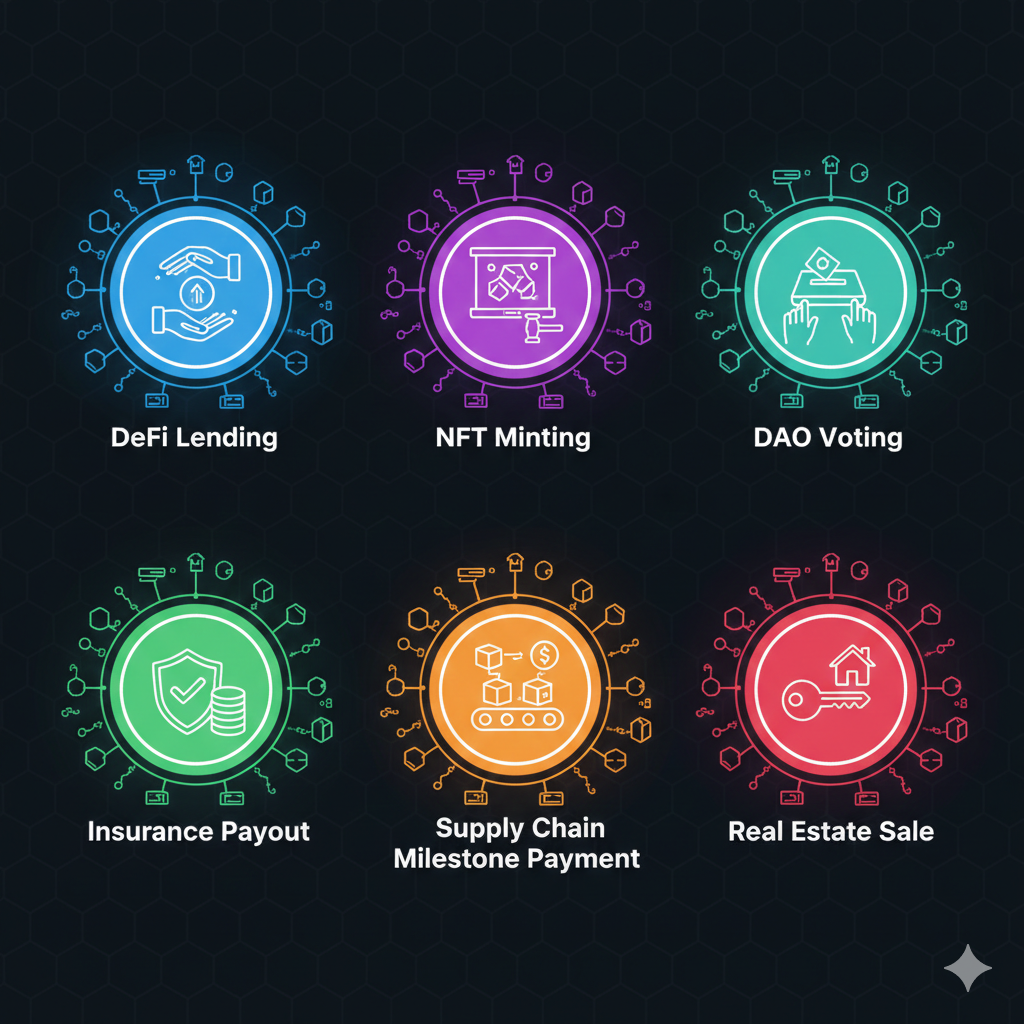
DeFi Lending and Borrowing
Protocols like Aave and Compound use smart contracts to manage overcollateralized loans. Borrowers lock up crypto as collateral; lenders deposit funds to earn interest. Everything is automatic — no bank officers, no credit checks, no geography restrictions.
NFTs and Digital Ownership
NFT smart contracts define the rules of ownership, royalties, and transferability for digital assets. When you buy an NFT, the contract automatically reassigns ownership; royalties automatically credit the original creator on each resale.
Insurance
Parametric insurance on-chain pays out automatically when verifiable events occur — flight delays, crop failures, earthquake magnitudes — without requiring a claims investigation process.
DAO Governance
DAOs use smart contracts to implement governance: token holders vote on proposals, and the contract automatically executes the winning outcome — allocating funds, changing parameters, or hiring contractors — with no human intermediary.
Smart Contract FAQs
Smart Technology Behind Your XRP Earnings
MineXrpOnline leverages blockchain technology for transparent, automated daily returns. Start earning XRP with the confidence of transparent, technology-driven processes.
See How It Works