Ethereum's Merge in September 2022 transformed ETH from a mineable asset into a stakeable one. Today, over 30% of all ETH in existence is staked, generating network security and validator rewards simultaneously. For ETH holders, staking is the simplest passive income mechanism in crypto.
Three Ways to Stake Ethereum
Three Ways to Stake Ethereum
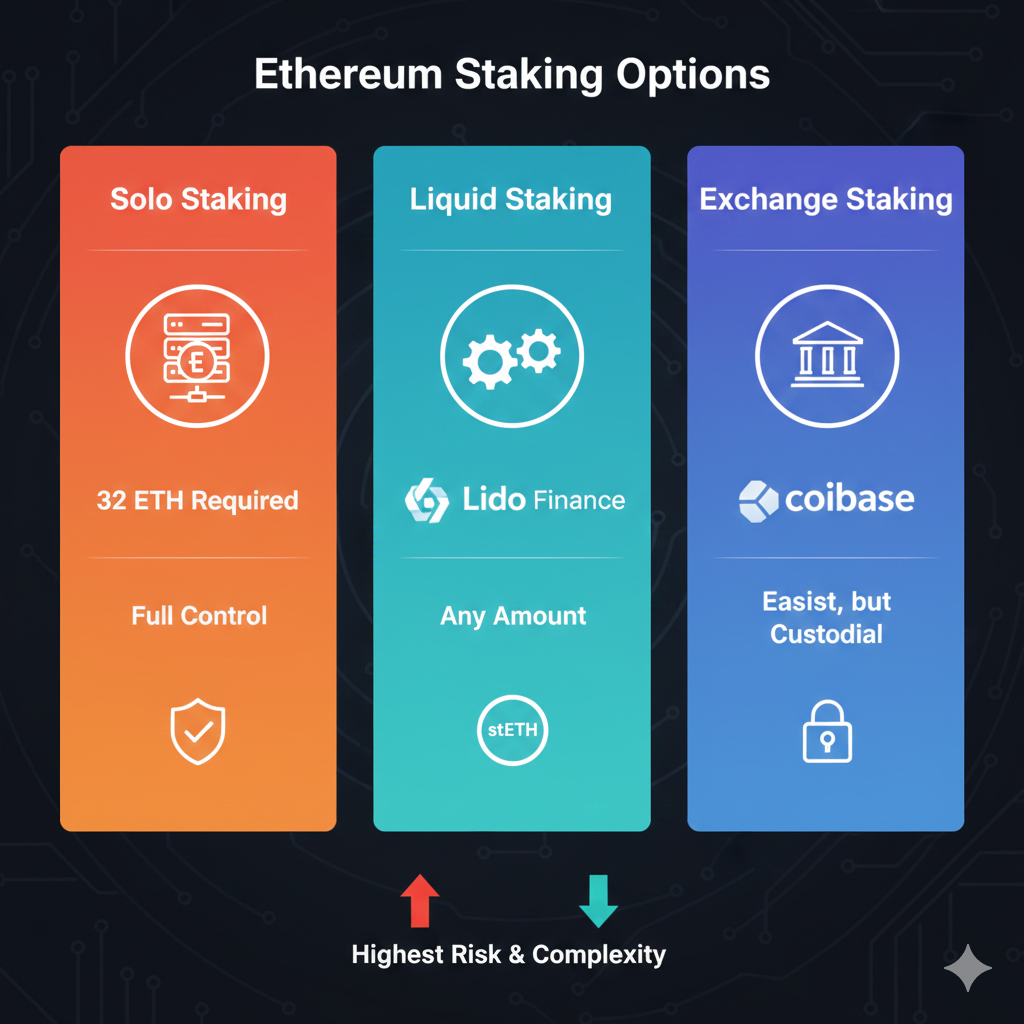
Solo Staking (32 ETH minimum)
Running your own validator node requires 32 ETH (~$60,000–$100,000 depending on price) and a dedicated server running 24/7. You earn the maximum ETH staking APY (~4–5%), keep full custody, and contribute to network decentralization. Best for technically-capable large holders.
Liquid Staking Protocols
Lido Finance, Rocket Pool, and Frax ETH allow any amount of ETH to be staked via smart contracts. You receive a liquid receipt token (stETH, rETH) that earns staking rewards while remaining tradeable and usable in DeFi. APY: ~3.5–4%. No minimum.
Exchange Staking
Coinbase cbETH, Binance BETH, and Kraken ETH staking offer a simple interface with no technical requirements. Convenience comes at a cost: higher fees, custodial (not your keys), and regulatory risk. APY: ~2.5–3.5%. Best for pure simplicity.
Liquid Staking: The Best Balance for Most Users
Liquid Staking: The Best Balance for Most Users
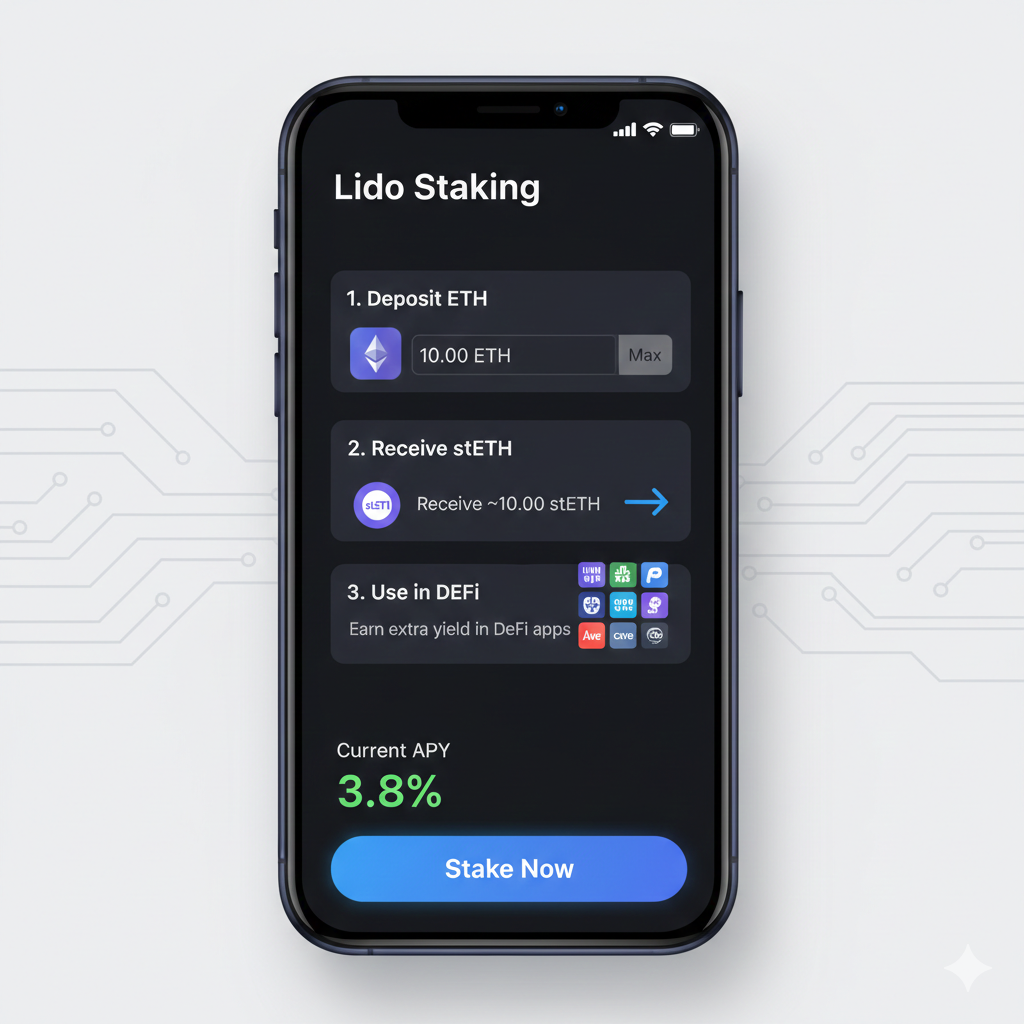
- ✓Lido Finance: largest liquid staking protocol, 30%+ of all staked ETH
- ✓Rocket Pool: more decentralized than Lido, rETH token
- ✓No lockup: stETH/rETH can be sold anytime on DEXs
- ✓Use in DeFi: deposit stETH as Aave collateral to earn additional yield
- ✓Current staking APY: approximately 3.5–5% annually
ETH Staking FAQs
Earn Passive Crypto Income Without 32 ETH
ETH staking requires significant capital. MineXrpOnline's XRP cloud mining starts at just $15 — making daily passive crypto income accessible to everyone at any budget.
Start with $15