
Traditional volume shows how much was traded over time (a time-based histogram at the bottom of charts). Volume Profile shows how much was traded at each price level (a horizontal histogram on the right side of charts). This fundamental difference reveals market structure invisible to traditional analysis: where participants actually traded, not just when.
Volume Profile Key Concepts
Volume Profile Key Concepts

- ✓Point of Control (POC): the price level with the highest volume traded — strongest magnetic price
- ✓Value Area (VA): the price range containing 70% of session volume — most 'fair' prices
- ✓High Value Node (HVN): areas of high volume — strong support/resistance, slow price action
- ✓Low Value Node (LVN): areas of low volume — fast price movement, weak S/R
- ✓Value Area High (VAH): upper boundary — acts as resistance when price approaches from below
- ✓Value Area Low (VAL): lower boundary — acts as support when price approaches from above
Trading with Volume Profile
Trading with Volume Profile
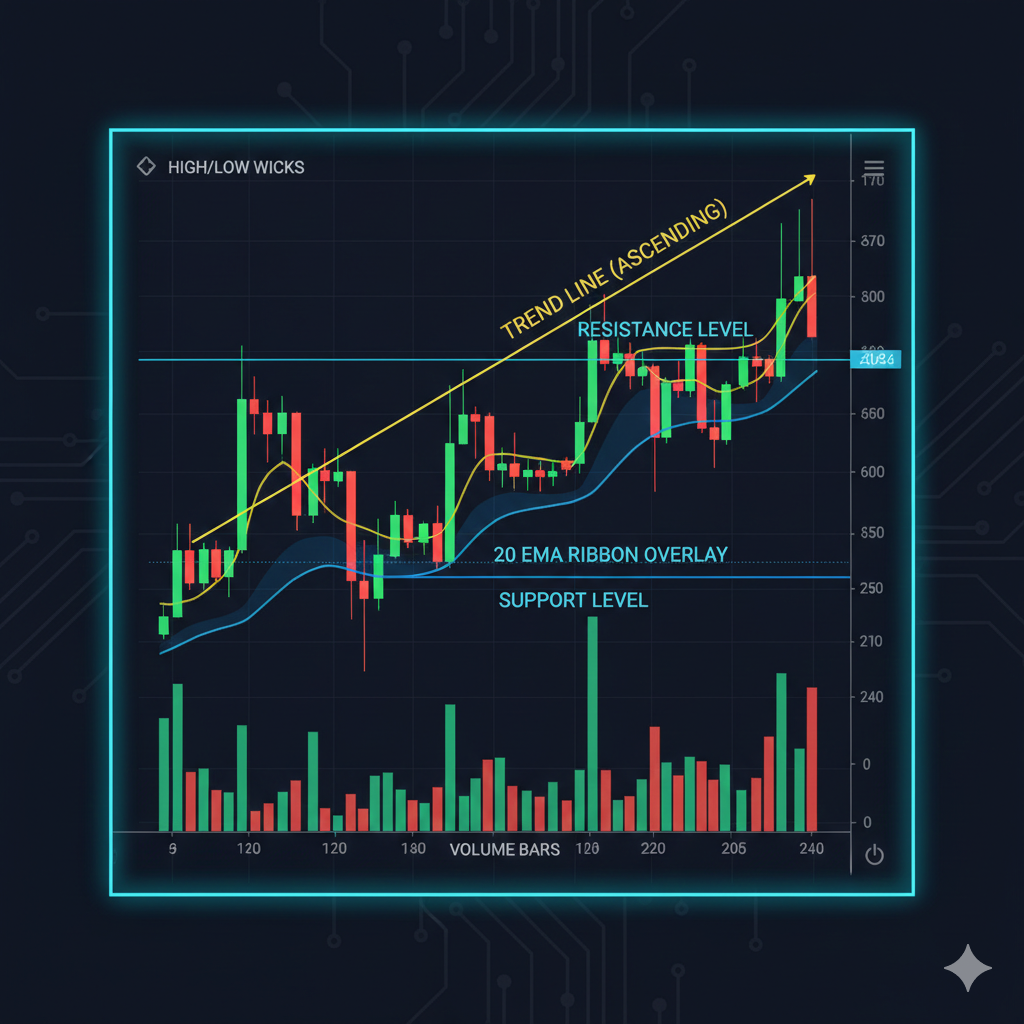
Core volume profile strategy: when price retests the POC from above, it often finds support — creating high-probability long entries with stops below the VAL. When price retests the POC from below (rejected it as support and trading below), it often acts as resistance — shorting on POC retests with stops above the VAH.
Breakout strategy: when price breaks above the VAH with momentum, low-volume nodes above become the express lane to the next HVN. Price accelerates through thin volume areas — setting up breakout entries targeting the next HVN as the take-profit zone.
Volume Profile FAQs
Trade Smarter, Accumulate XRP Regardless
Whether you're a Volume Profile trader or a long-term HODLer, MineXrpOnline's daily XRP earnings build your position regardless of market conditions — the perfect complement to any trading strategy.
Add Passive XRP to Your Strategy