Ethereum and Solana represent two different philosophies of blockchain design. Ethereum: maximize security and decentralization first, scale later through L2 solutions. Solana: optimize at the base layer for high throughput and low fees, accepting higher hardware requirements and some centralization trade-offs.
Performance Comparison
Performance Comparison
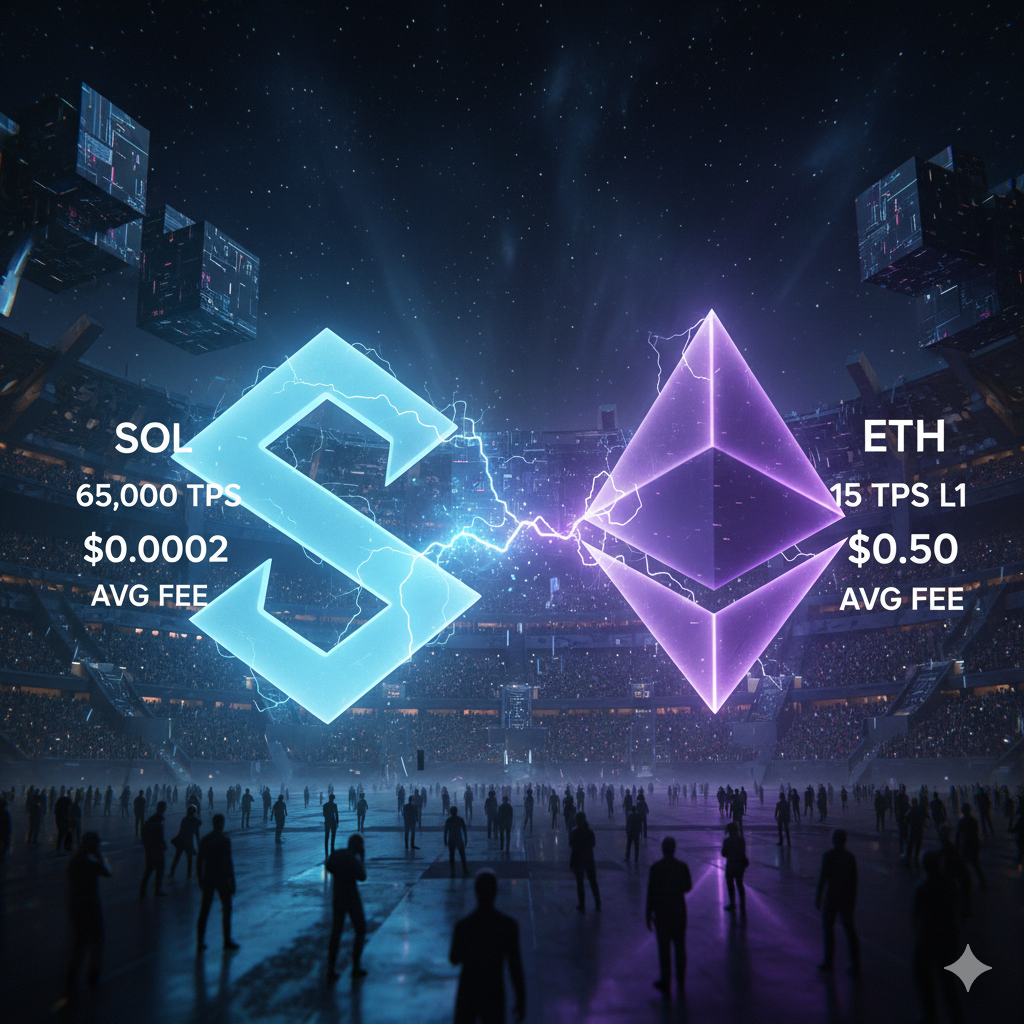
Throughput and Fees
Solana's base layer handles 65,000 TPS with sub-second finality and fees typically under $0.001. Ethereum L1 processes ~15 TPS with average fees of $0.50–$5 during moderate activity (much higher during NFT mints or market volatility). However, Ethereum L2s (Arbitrum, Base) achieve 2,000–7,000 TPS with fees under $0.10.
Decentralization and Security
Ethereum has 500,000+ validators worldwide — the most decentralized PoS network. Its history of 99.99%+ uptime and zero successful 51% attacks demonstrates security. Solana has ~1,900 validators (hardware requirements are higher, limiting validator count) and has experienced multiple network outages — though zero in 2024–2025 following engineering improvements.
Ecosystem Comparison
Ecosystem Comparison
- ✓Ethereum DeFi TVL: $40–60B (Aave, Uniswap, Lido, MakerDAO dominate)
- ✓Solana DeFi TVL: $8–12B (rapidly growing Raydium, Jupiter, Marinade)
- ✓ETH developer community: 5,000+ active monthly contributors
- ✓SOL developer community: ~2,500 active monthly contributors (fastest growing)
- ✓ETF status: ETH spot ETF approved; SOL ETF applications filed (pending)
- ✓NFTs: Ethereum Magic Eden/OpenSea dominant; Solana Magic Eden growing
Solana vs Ethereum FAQs
Diversify with XRP Cloud Mining
While you decide between ETH and SOL positions, add XRP to your portfolio through daily cloud mining. Three different crypto assets, three different value drivers — balanced crypto exposure.
Add XRP Cloud Mining