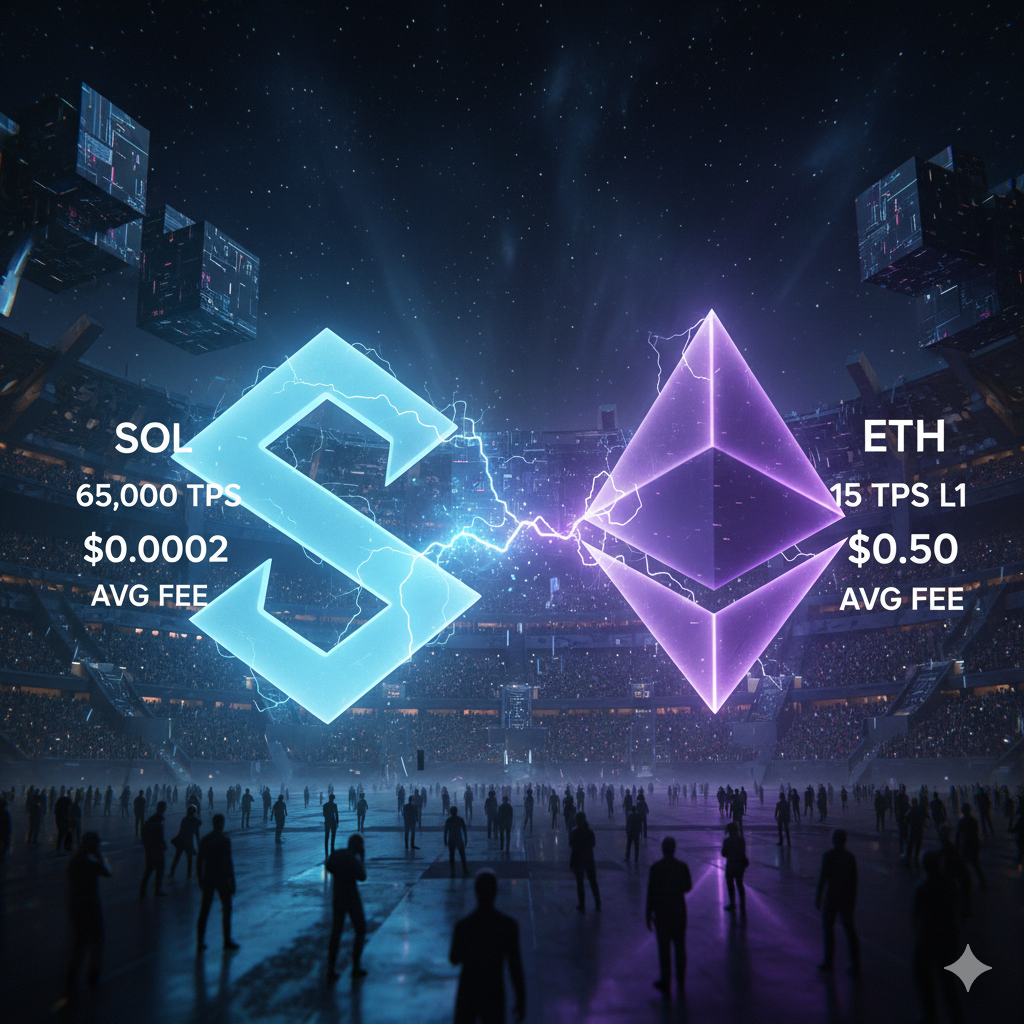
Solana was built with a singular vision: process transactions at the speed of light. By avoiding sharding and Layer-2 fragmentation, Solana offers a monolithic, composable environment where transactions cost fractions of a cent and settle in milliseconds. After recovering from the FTX collapse of 2022 — which nearly destroyed the ecosystem — Solana emerged stronger and more decentralized than ever, becoming the chain of choice for retail traders, DePIN networks, and institutional token launches.
Solana's Technical Architecture
Solana achieves its throughput through a combination of Proof of History (PoH) and Proof of Stake (PoS). PoH creates a cryptographic timestamp for each transaction, allowing validators to process transactions in a known, ordered sequence without consulting each other first — dramatically increasing parallel processing speed.
The network can theoretically handle 65,000 transactions per second (TPS) at peak capacity. In practice, it consistently handles 2,000-5,000 TPS under real-world conditions, which is still orders of magnitude faster than Ethereum's base layer (15-30 TPS) or the XRP Ledger's steady 1,500 TPS.
Transaction fees on Solana are measured in lamports (1/1,000,000,000 SOL) — effectively fractions of a cent. This makes Solana uniquely suited for high-frequency, micro-transaction use cases like gaming, DePIN sensor networks, and retail trading.
Key Pillars of the Solana Ecosystem
Decentralized Finance (DeFi)
Jupiter is the undisputed king of DEX aggregators on Solana, processing billions in monthly volume by routing trades across Raydium, Orca, and other liquidity pools. Marinade Finance leads liquid staking, letting users stake SOL while keeping liquidity via mSOL tokens. The total value locked (TVL) in Solana DeFi has grown 4x since 2024, with institutional protocols like Drift and Phoenix providing professional-grade perpetuals infrastructure.
DePIN (Decentralized Physical Infrastructure)
Solana's low fees make it the required architecture for the micro-transactions needed in decentralized physical networks. Helium migrating to Solana was the major catalyst for this sector. In 2026, Hivemapper has over 15 million km of roads mapped by community contributors earning crypto daily. Render Network processes billions in GPU compute jobs monthly for AI and visual effects studios.
Memecoins and Retail Trading
Pump.fun made Solana the absolute capital of retail memecoin activity, with thousands of new tokens launching daily. While most memecoins fail, the platform drives immense fee revenue for validators and generates billions in trading volume that benefits SOL stakers through network activity.
NFTs and Gaming
Magic Eden operates the largest cross-chain NFT marketplace, with Solana as its primary ecosystem. Tensor has emerged as the professional-grade alternative. In gaming, Star Atlas is building one of the most ambitious blockchain game economies on Solana, with real asset ownership for in-game items and vehicles.
How to Earn Passive Income on Solana
- ✓Native SOL staking: Delegate SOL to a validator and earn ~4-7% APY annual yield paid in SOL. No lock-up period required.
- ✓Liquid staking via Marinade (mSOL) or Jito (jitoSOL): Earn staking yield while keeping liquidity for DeFi activities.
- ✓Liquidity providing (LP): Deposit token pairs into Jupiter-connected pools to earn swap fees. Higher risk due to impermanent loss.
- ✓DePIN network participation: Run a Helium hotspot, a Hivemapper dashcam, or a Render GPU node to earn tokens from physical infrastructure.
- ✓Yield aggregators: Protocols like Kamino Finance auto-compound yield across multiple Solana DeFi strategies.
- ✓Cloud mining XRP and buying SOL with yields: Use MineXrpOnline daily XRP payouts to systematically accumulate SOL during dips.
Solana vs XRP Ledger: Different Tools for Different Jobs
A common misunderstanding is that Solana and XRP Ledger are competitors. In reality, they target different markets. Solana is optimized for consumer applications, high-frequency trading, gaming, and DePIN. XRP Ledger is optimized for institutional cross-border payments, FX settlements, and low-cost remittances.
The most sophisticated crypto portfolios hold both. Both generate passive income through different mechanisms: Solana via staking (~5% APY in SOL), XRP Ledger-based cloud mining via MineXrpOnline (daily XRP payouts). Combining both creates a diversified passive income stream from two fundamentally different blockchain architectures.
Solana FAQs
Diversify Your Crypto Portfolio With Daily XRP Income
The smartest portfolios combine XRP accumulation from cloud mining with exposure to Solana's ecosystem. Use your daily XRP yields from MineXrpOnline to systematically invest in SOL, DePIN tokens, and high-conviction blockchain projects.
Start Mining XRP Daily