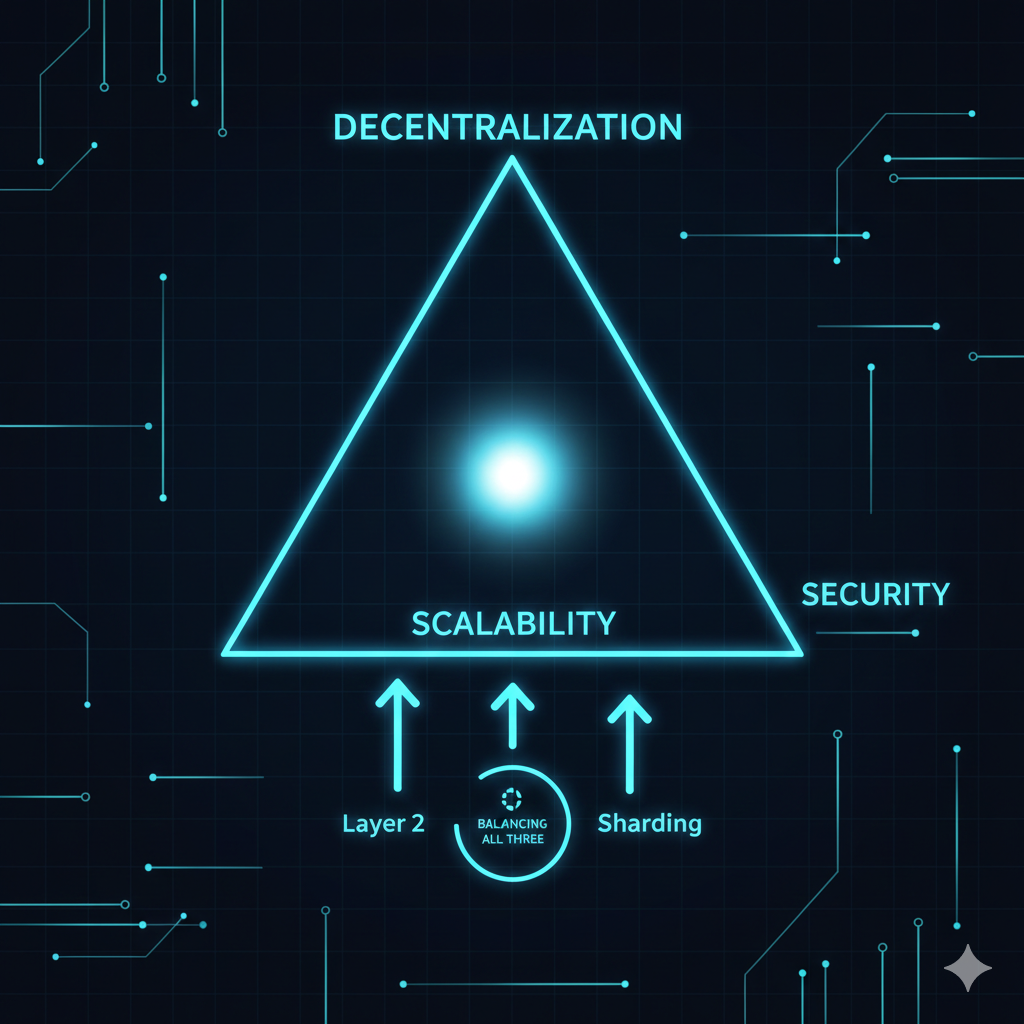
The Blockchain Trilemma states that any blockchain can only truly optimize for two of three properties: Decentralization, Security, and Scalability. Each Layer 1 network makes different tradeoffs. Understanding these tradeoffs is essential for allocating capital wisely across networks and identifying where to build passive income exposure.
The Blockchain Trilemma Explained
Bitcoin maximizes Security and Decentralization but sacrifices Scalability (7-10 TPS). Solana maximizes Security and Scalability but makes partial tradeoffs in Decentralization (high hardware requirements for validators). Ethereum's L1 is secure and decentralized but relies on Layer-2 networks for scalability. XRP Ledger prioritizes Scalability and Security within a federated trust model.
None of these are objectively 'wrong' choices. They reflect different visions for what a global financial network should prioritize. The multi-chain reality of 2026 means capital flows between these networks based on which properties matter most for a given application.
Head-to-Head Comparison
Ethereum (ETH)
Consensus: Proof-of-Stake. TPS: ~15-30 L1 (100,000+ with L2 rollups). Finality: ~12 minutes (L1), ~1-2 seconds (L2 with fast finality). Fee: $1-50 L1, $0.01-2 on L2. Strengths: Most DeFi TVL, strongest developer ecosystem, most institutional trust, progressive decentralization. Passive income: ~3-5% APY staking. Best for: DeFi, NFTs, institutional DeFi, RWA tokenization.
Solana (SOL)
Consensus: Proof of History + Proof of Stake. TPS: 2,000-65,000. Finality: ~400ms. Fee: <$0.001. Strengths: Fastest monolithic L1, cheapest fees, strongest retail trading ecosystem, best DePIN infrastructure. Passive income: ~4-7% staking APY. Best for: high-frequency trading, gaming, DePIN networks, memecoins.
XRP Ledger (XRP)
Consensus: Federated Byzantine Agreement (FBA). TPS: 1,500 sustained. Finality: 3-5 seconds. Fee: ~$0.0002. Strengths: Purpose-built for payments, regulatory clarity from SEC case resolution, 300+ institutional partnerships via Ripple, native DEX and asset issuance. Passive income: Cloud mining via MineXrpOnline (daily XRP payouts), liquidity provision on XRPL DEX. Best for: cross-border payments, institutional FX, CBDC bridges, remittances.
Cardano (ADA)
Consensus: Ouroboros Proof-of-Stake. TPS: ~250 sustained. Finality: ~10 minutes. Fee: ~$0.17. Strengths: Peer-reviewed academic approach, high decentralization, growing DeFi ecosystem via Muesliswap and Minswap. Passive income: ~3-5% staking APY with no lock-up. Best for: long-term fundamental investors, governance participation.
Avalanche (AVAX)
Consensus: Snowman Protocol. TPS: 4,500+. Finality: ~2 seconds. Fee: ~$0.01-1 depending on subnet. Strengths: Enterprise subnet architecture for custom blockchains, strong institutional adoption for proof-of-reserve and tokenization. Passive income: ~5-8% staking APY. Best for: enterprise applications, gaming subnets (DFK, Dexalot), institutional tokenization.
How to Earn Passive Income Across Multiple L1s
- ✓XRP: Cloud mining via MineXrpOnline — daily XRP payouts without holding volatile assets upfront. Best risk-adjusted passive income for XRP accumulation.
- ✓Ethereum: Liquid staking via Lido (stETH) — stake any ETH amount, earn ~3-5% APY, maintain liquidity.
- ✓Solana: Wallet staking via Phantom — delegate SOL to validators, earn ~4-7% APY with no lock-up.
- ✓Cardano: Native wallet staking via Yoroi or Daedalus — no lock-up, ~3-5% APY, validator selection matters.
- ✓Avalanche: Stake AVAX natively (minimum 25 AVAX) for ~5-8% APY, or delegate to a validator with no minimum.
- ✓Diversification strategy: Use XRP mining income to systematically fund staking positions across multiple L1s.
Which Layer 1 is Best for 2026?
The correct answer is all of them — in different proportions based on your thesis. Bitcoin remains the unquestionable store of value and hedge. Ethereum provides the most robust DeFi and institutional ecosystem for passive income. Solana offers the highest-risk, highest-reward exposure to retail trading volume and DePIN growth. XRP offers the most compelling institutional payment narrative and regulatory clarity.
The most successful crypto portfolios in 2026 hold multiple L1s as strategic positions while generating passive income from each through staking, liquid staking, or cloud mining. XRP cloud mining through MineXrpOnline provides the unique benefit of daily XRP accumulation without requiring a large upfront capital deployment — perfect for building positions gradually.
Layer 1 Comparison FAQs
Build Your Multi-Chain Passive Income Stack
Start with XRP cloud mining as your foundation — get daily payouts from day one. Then use those yields to build staking positions across Ethereum and Solana. MineXrpOnline makes the first step effortless.
Start Earning Daily XRP