
The #1 mistake in crypto investing isn't picking the wrong coin — it's poor risk management that turns recoverable losses into account-ending disasters. A thoughtful risk framework lets you survive bear markets with capital intact and attack the next opportunity from a position of strength.
The 1% Rule: Position Sizing Foundation
The 1% Rule: Position Sizing Foundation
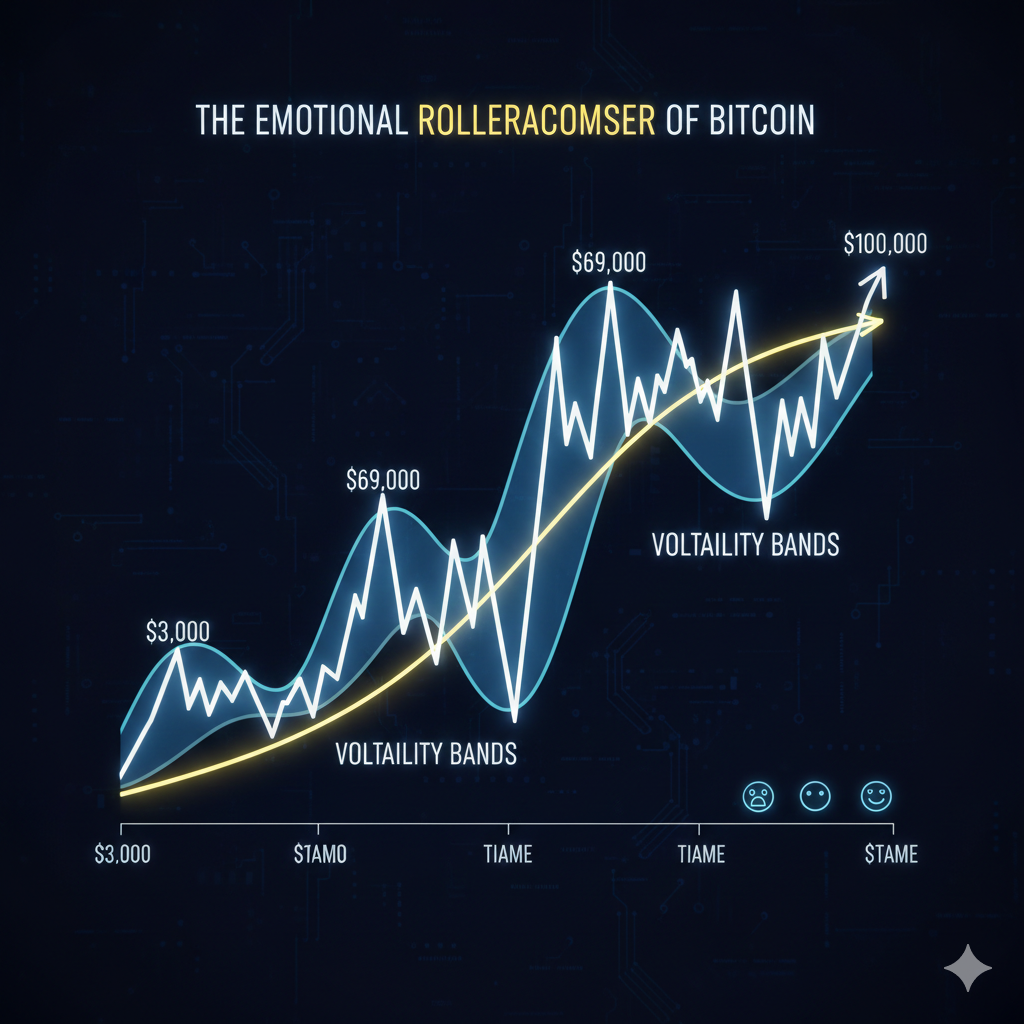
The 1% rule: never risk more than 1-2% of your total portfolio on any single trade. If your portfolio is $10,000, maximum loss per trade = $100-$200. This sounds restrictive until you consider: even 10 consecutive losing trades (unlikely if your strategy has edge) only reduces your account by 10%, leaving you with capital and the ability to recover.
Position sizing calculation: (Portfolio Size × Risk%) ÷ Trade Stop-Loss % = Position Size. Example: $10,000 portfolio, 1% risk, stop-loss 5% below entry = $10,000 × 0.01 ÷ 0.05 = $2,000 position. Simple math that keeps losses manageable regardless of market volatility.
Stop-Loss Strategies for Crypto
Stop-Loss Strategies for Crypto

- ✓Hard stop-loss: placed below key technical support levels, not arbitrary percentages
- ✓ATR trailing stop: stop moves up proportional to Average True Range, locks in profits
- ✓Time stop: exit position if thesis hasn't played out within expected timeframe
- ✓Volatility adjustment: widen stops 1.5-2x in high-volatility periods (use ATR as guide)
- ✓Never move a stop-loss further away after entry — only move it to lock in profits
- ✓Exchange order stops vs mental stops: exchange stops execute reliably; mental stops rarely do
Correlation Risk in Crypto Portfolios
Correlation Risk in Crypto Portfolios
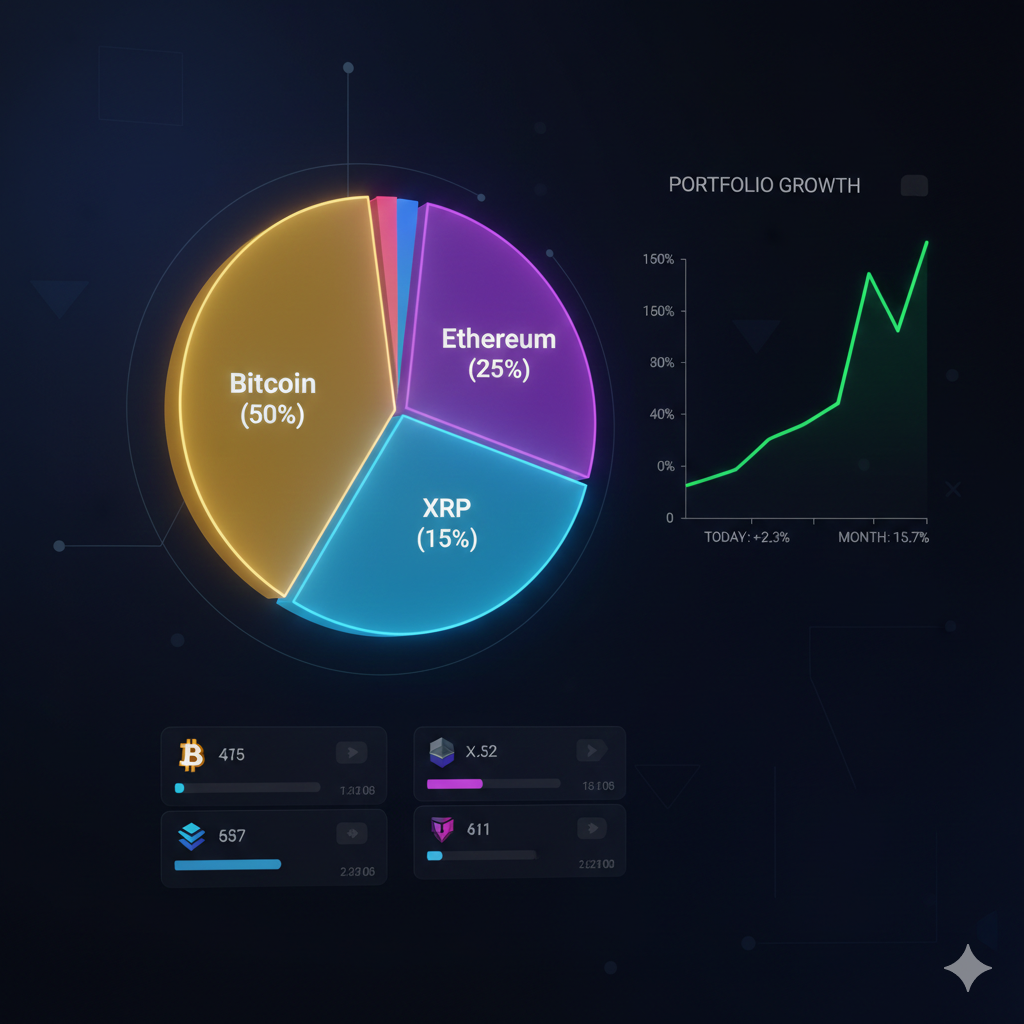
The most dangerous illusion in crypto portfolio construction: believing that holding 20 different coins provides diversification. In bear markets, all cryptocurrencies are highly correlated — they fall together. True diversification requires assets with negative or near-zero correlation to crypto (cash, gold, short positions, real estate).
Crypto-specific diversification that does work: balancing between high-cap (BTC, ETH, XRP) and mid-cap positions, sector diversification (payments, DeFi, infrastructure), and geographic exposure (different regulatory environments). These reduce idiosyncratic risk but don't protect against systemic crypto market crashes.
Risk Management FAQs
Build a Risk-Managed XRP Position with Daily Earnings
Cloud mining is inherently risk-managed: your daily XRP earnings are generated from a fixed contract investment with no liquidation risk, no stop-loss required. It's the most sustainable XRP accumulation approach.
Start Risk-Managed XRP Earning