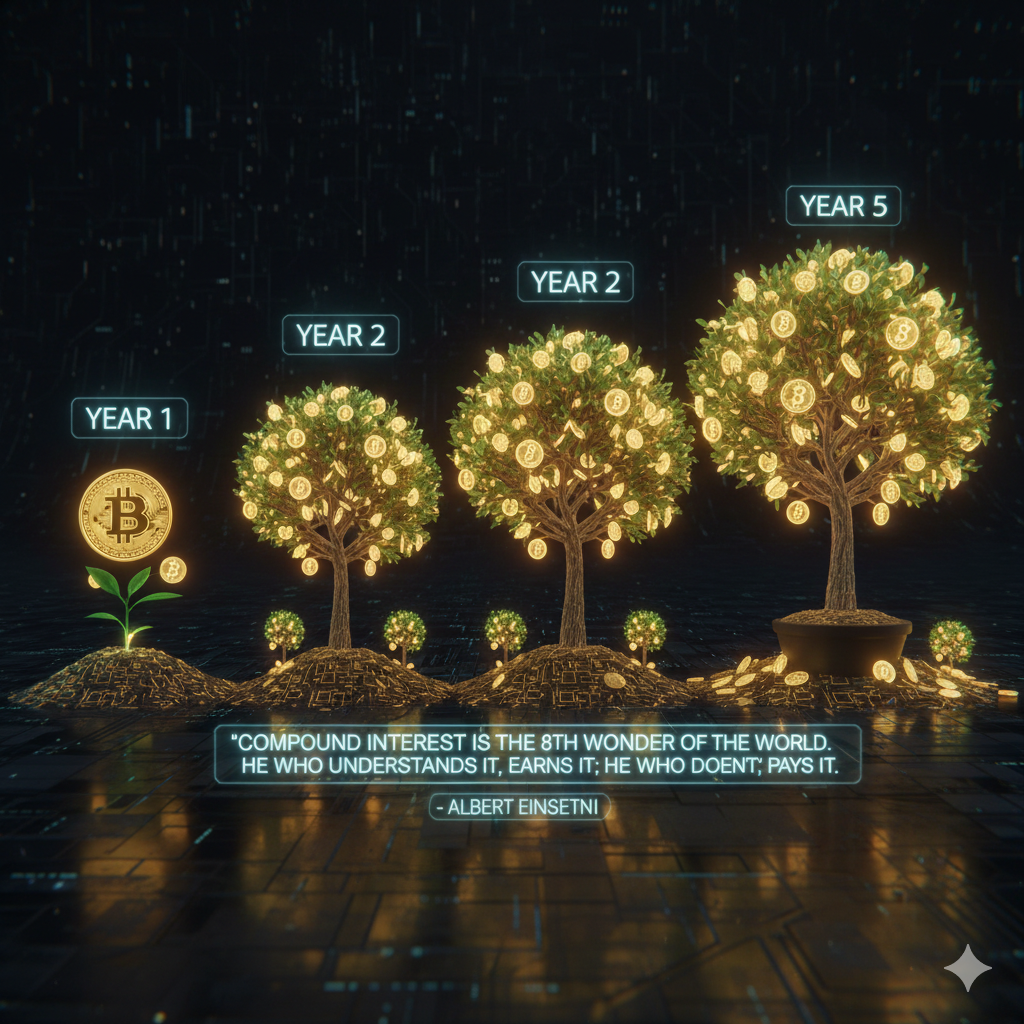
The difference between gambling and investing is systematic asset allocation. When retail investors enter crypto, they often buy 10 random coins hoping one goes up 100x. When institutions enter crypto, they allocate capital across risk tiers (Core, Growth, Speculative) to create a risk-adjusted portfolio that systematically generates yield. Transforming from a gambler tracking hourly price swings into an investor managing a passive income machine requires adopting this mindset.
The Three-Tier Portfolio Architecture
A resilient portfolio is constructed like a pyramid. The broad base secures the foundation with lower-volatility blue chips. The middle tier targets sectoral growth. The narrow tip hunts for exponential returns with minimal capital.
Tier 1: Core Foundation (50-60%)
The undisputed base layer of any serious crypto portfolio. This includes Bitcoin (the ultimate store of value), Ethereum (the foundational settlement layer of DeFi), and XRP (the premier institutional payment utility). In 2026, a portfolio without these three is inherently unbalanced. The primary goal of this tier is wealth preservation and reliable, low-risk passive income generation via staking or cloud mining.
Tier 2: Growth / Sector Leaders (25-35%)
Assets with proven product-market fit driving specific narratives. This includes Tier-1 Layer 1 alternatives (Solana, Avalanche), leading DePIN networks (Render, Helium), and top Real World Asset (RWA) protocols (Ondo, Chainlink). These assets typically have $1B–$15B market caps. They carry higher risk than the Core, but offer significantly higher appreciation potential during altcoin rotation cycles.
Tier 3: Speculative / High-Yield (10-15%)
Sub-$500M market cap projects, newly launched tokens, AI micro-caps, and complex DeFi yield farming strategies. Ensure this allocation never exceeds a percentage where total loss would mentally or financially derail you. If it goes to zero, the portfolio survives. If it goes 50x, it provides massive alpha. Treat this tier as venture capital.
Structuring the Passive Income Engine
A static portfolio relies entirely on price appreciation to make money. A dynamic portfolio generates cash flow regardless of price action. Here is how to construct the income engine in 2026:
XRP Cloud Mining (Core): Allocate a portion of capital to MineXrpOnline contracts. This provides pure, predictable daily accumulation of XRP without requiring active management or exposing funds to smart contract risk.
ETH/SOL Staking (Core/Growth): Delegate your ETH via liquid staking (Lido) and natively stake SOL via your wallet. This generates 4-7% APY in token terms, compounding your base layer assets safely.
Stablecoin Yield (Cash Reserve): Instead of holding fiat in a bank at 0%, keep your 'dry powder' (waiting to buy dips) in USDC or USDT, deployed into blue-chip lending protocols like Aave to earn 5-8% API while fully liquid.
The Accumulation Rebalancing Strategy
Portfolio percentages drift over time. If Solana triples and Bitcoin drops, your portfolio becomes overexposed to SOL risk. Strict rebalancing is mandatory.
The Passive Income Rebalance Strategy: Instead of selling outperforming assets (triggering taxable events), use your continuous XRP cloud mining distributions and staking yields to buy the underperforming assets. If your Bitcoin allocation drops below target, direct this month's XRP mining income into buying Bitcoin until the ratio is fixed. This effectively dollar-cost averages into weakness using newly minted yield.
Position Sizing and Conviction
Never hold more than 10-12 different assets. Humans cannot effectively track the development progress, governance proposals, and tokenomics changes of 40 different protocols simultaneously. If you don't have the conviction to allocate at least 2.5% of your portfolio to an asset, you shouldn't own it.
Concentrate to build wealth, diversify to preserve it. If you are starting fresh, concentrating heavily into cloud mining (to build baseline income) and Bitcoin/XRP is superior to spreading thin across 30 micro-caps.
Portfolio Construction FAQs
Build Your Core Passive Income Engine
Every strong portfolio needs an engine that produces regardless of market conditions. Make MineXrpOnline your core XRP generation engine. Start accumulating daily payouts that you can instantly re-invest or securely store.
Start Building Your Portfolio