
Every few months, headlines announce that quantum computing threatens to 'destroy' Bitcoin. Every few months, cryptographers respond that the threat is decades away and the industry is already preparing. The truth requires understanding what quantum computers actually can and can't do — and on what timeline.
How Quantum Computing Could Threaten Crypto
How Quantum Computing Could Threaten Crypto

ECDSA (Elliptic Curve Digital Signature Algorithm) — the cryptographic system protecting Bitcoin, XRP, and Ethereum private keys — is vulnerable to Shor's algorithm, which can be run on a sufficiently powerful quantum computer. A quantum computer with enough stable qubits (called 'cryptographically relevant quantum computing' or CRQC) could theoretically derive a private key from a public key in hours.
The critical caveat: ECDSA is only exposed when a public key is revealed (during transaction signing). Bitcoin and XRP addresses are hashes of public keys — the actual public key is only revealed when you spend from an address. Reused addresses are more vulnerable than single-use addresses.
The Realistic Timeline
The Realistic Timeline

As of 2026, the most powerful quantum computers have approximately 1,000-5,000 noisy physical qubits. Breaking ECDSA-256 requires approximately 4-7 million stable, error-corrected logical qubits — each requiring 1,000-10,000 physical qubits to error-correct. The actual requirement is billions of physical qubits with error correction sophistication we don't yet possess.
Realistic timeline: most cryptographers estimate CRQC capable of breaking ECDSA is 15-30 years away. NIST published post-quantum cryptography standards in 2024, giving the entire computing industry a clear migration path. Crypto networks will upgrade long before quantum threats materialize.
How Crypto Is Preparing for Quantum
How Crypto Is Preparing for Quantum
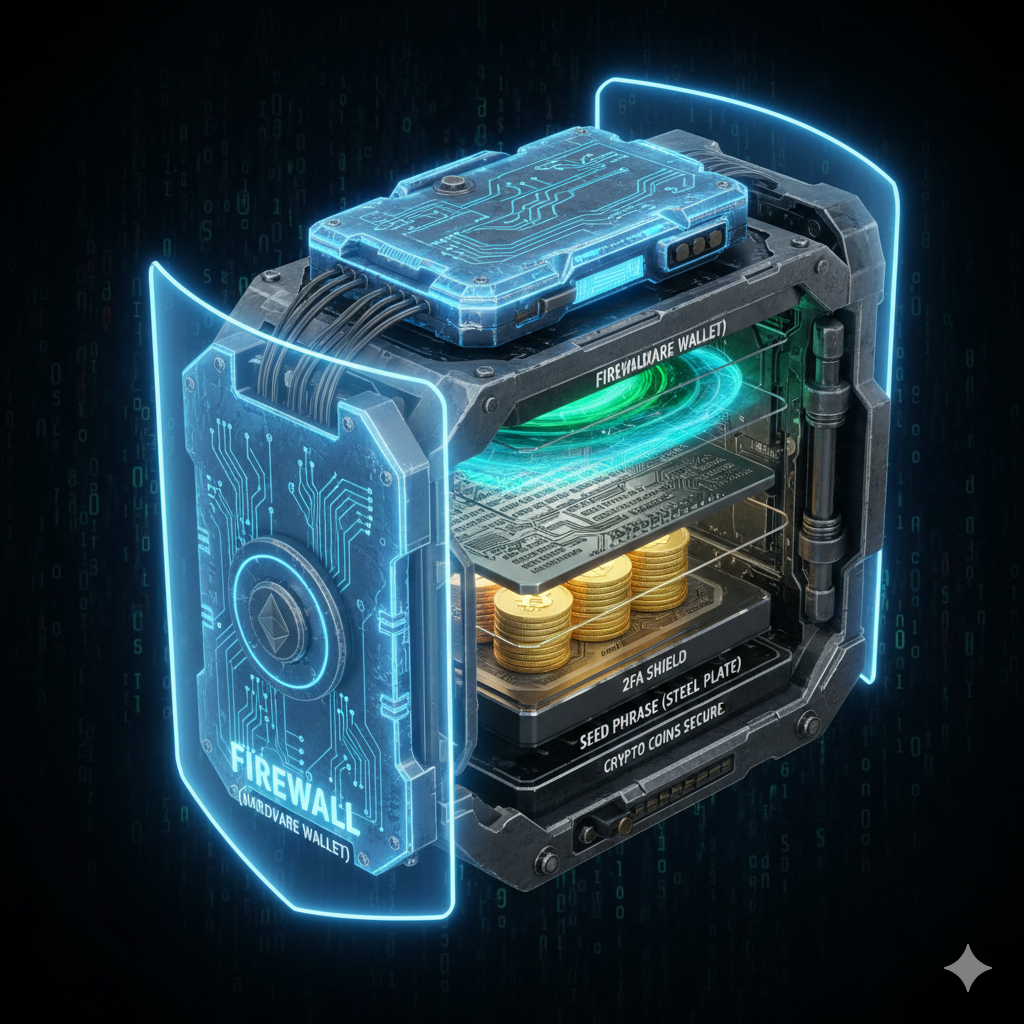
- ✓NIST finalized post-quantum cryptographic standards in 2024 (CRYSTALS-Kyber, CRYSTALS-Dilithium)
- ✓Bitcoin developers are already designing tape root-compatible quantum-safe signature schemes
- ✓XRP Ledger's amendment process can add quantum-resistant signature algorithms when needed
- ✓Ethereum's roadmap explicitly includes quantum resistance migrations
- ✓Best practice today: avoid reusing addresses (each use exposes public key)
- ✓Hardware wallet firmware updates will implement post-quantum signatures when standards are established
Quantum Computing Crypto FAQs
Long-Term Crypto Requires Long-Term Thinking
The real risk in crypto isn't quantum computing in 2026 — it's not being in the market for the current bull cycle. Build your XRP position now through MineXrpOnline while quantum-safe upgrades are still decades away.
Start Mining XRP for the Long Term