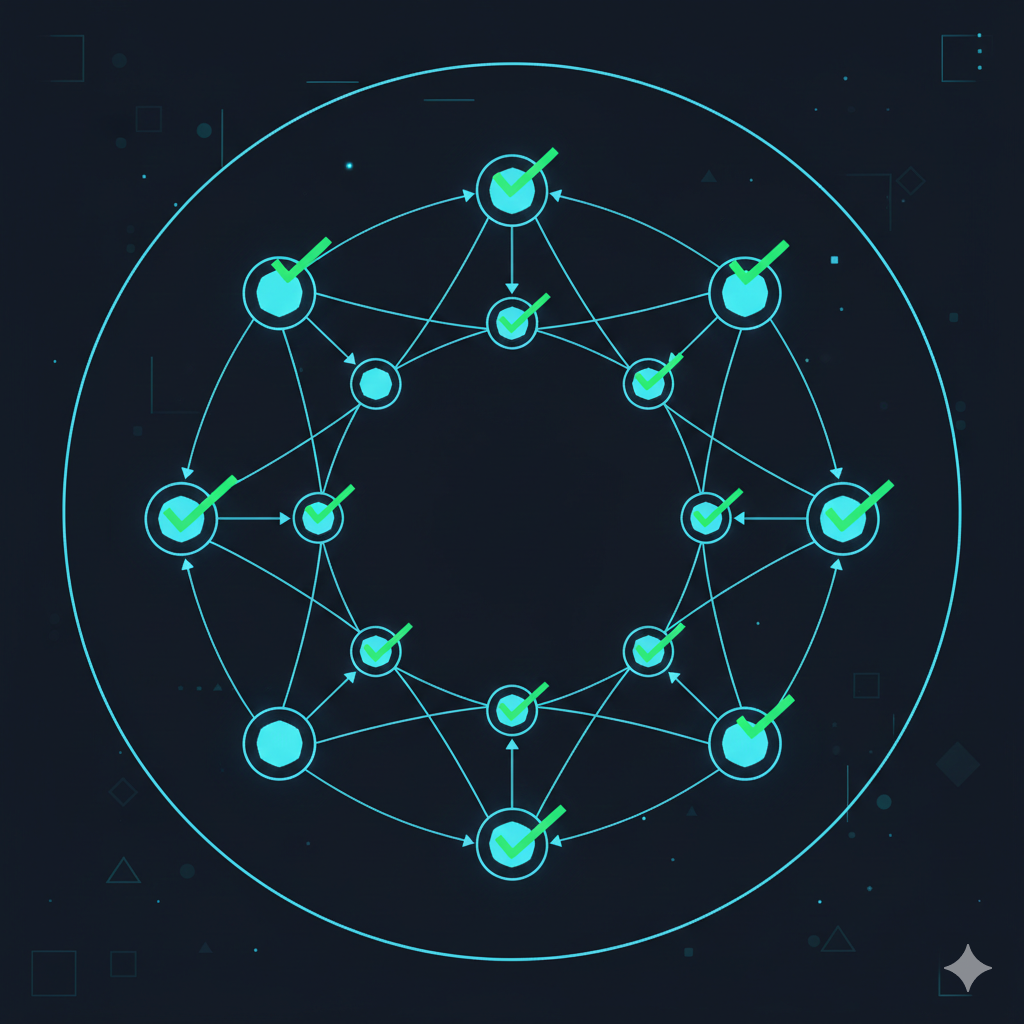
Bitcoin uses miners competing with computer power to validate transactions. Ethereum shifted to stakers competing with capital. The XRP Ledger uses neither — instead relying on a network of trusted validators applying a Byzantine fault-tolerant consensus algorithm that settles transactions in under 5 seconds flat.
What Are XRPL Validators?
What Are XRPL Validators?

XRPL validators are servers that participate in the network's consensus process. Unlike Bitcoin miners, validators do not earn rewards for their work — they participate for the benefit of the network they rely on (banks, businesses, developers who need reliable XRP infrastructure) or to verify the integrity of transactions for their own purpose.
As of 2026, the XRPL maintains approximately 150+ validator nodes operated by universities, financial institutions, cryptocurrency exchanges, technology companies, and independent operators across 40+ countries. Ripple operates some validators but is far from a majority.
The Consensus Process: How It Works
The Consensus Process: How It Works

Every 3-5 seconds, the XRPL closes a new ledger through the following process: validators collect pending transactions, propose a candidate set, compare proposals with trusted peers, and iteratively refine consensus. Once 80% of trusted validators agree on a transaction set, the ledger closes and those transactions are finalized — irreversibly.
The key innovation: XRPL consensus requires 80% agreement (not 51% like Bitcoin), making double-spend attacks practically impossible and creating stronger finality guarantees. Once a transaction is in a closed ledger, it cannot be reversed under any circumstances.
The Unique Node List (UNL)
The Unique Node List (UNL)
Each XRPL validator maintains a Unique Node List (UNL) — a customizable list of other validators it trusts for consensus. The default UNL is a recommended list maintained by XRPL Labs, and most validators use this as a starting point. However, any validator can customize its UNL to trust different sets of servers.
The security model: as long as no more than 20% of any quorum's trusted validators are malicious or Byzantine, consensus succeeds honestly. With UNLs spread across diverse operators globally, coordinated attack on 20%+ of trusted validators is infeasible.
XRPL Consensus FAQs
Build on the World's Most Battle-Tested Payment Ledger
XRPL's 12-year track record of reliable consensus makes it the most proven payment blockchain. Leverage that reliability by earning XRP daily through MineXrpOnline's cloud mining platform.
Start Mining XRP