Gavin Wood, Polkadot's creator and former Ethereum CTO, identified blockchain interoperability as one of crypto's fundamental unsolved problems. Polkadot's architecture directly addresses the 'island problem' — blockchains that cannot communicate with each other, limiting the composability of the entire space.
How Polkadot Works: Relay Chain + Parachains
How Polkadot Works: Relay Chain + Parachains
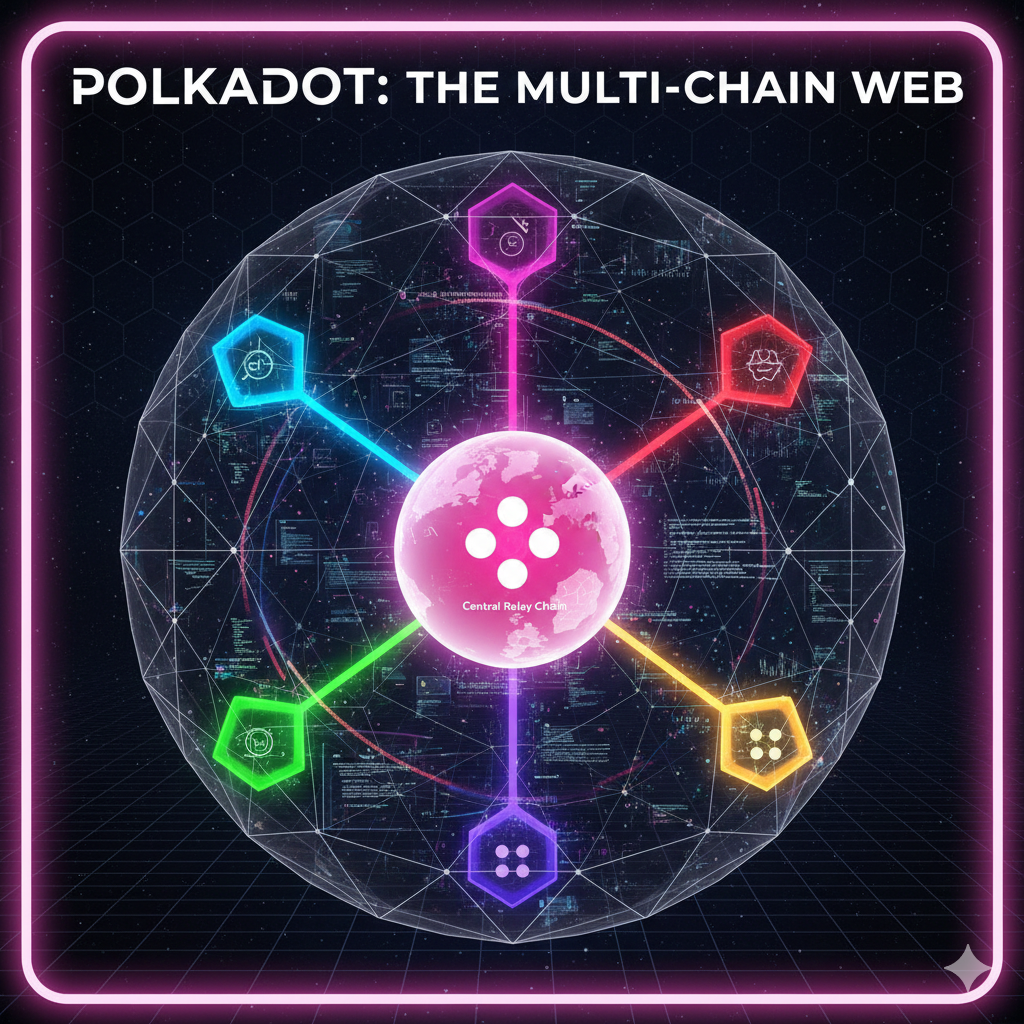
Relay Chain: Shared Security Hub
The relay chain is Polkadot's central chain — it provides shared security for all connected parachains. Validators stake DOT to secure the relay chain, and that security umbrella extends to every parachain simultaneously. This means even a new, small parachain has the full security of Polkadot's multi-billion dollar staked security from day one.
Parachains: Specialized Application Chains
Parachains are custom blockchains that connect to the relay chain and inherit its security. Each parachain is designed for a specific purpose: Acala (DeFi), Moonbeam (EVM compatibility), Astar (smart contracts), Phala (privacy computing). Projects bid for parachain slots through DOT auctions.
DOT Token: Governance and Staking
DOT Token: Governance and Staking

- ✓DOT staking: ~14% APY for active nominators in 2025
- ✓On-chain governance: DOT holders vote directly on all network upgrades
- ✓Forkless upgrades: Polkadot can upgrade without hard forks via governance
- ✓Parachain slot auctions: projects lock DOT to lease network slots
- ✓Nominated Proof of Stake: nominate validators without running your own node
- ✓OpenGov system: treasury funding and upgrades fully on-chain democratic
Polkadot FAQs
Build Your Multi-Asset Crypto Portfolio
DOT, ETH, XRP, BTC — a diversified multi-chain portfolio captures the full breadth of crypto's growth. Add daily XRP accumulation through cloud mining to your portfolio strategy.
Add XRP Mining to Portfolio