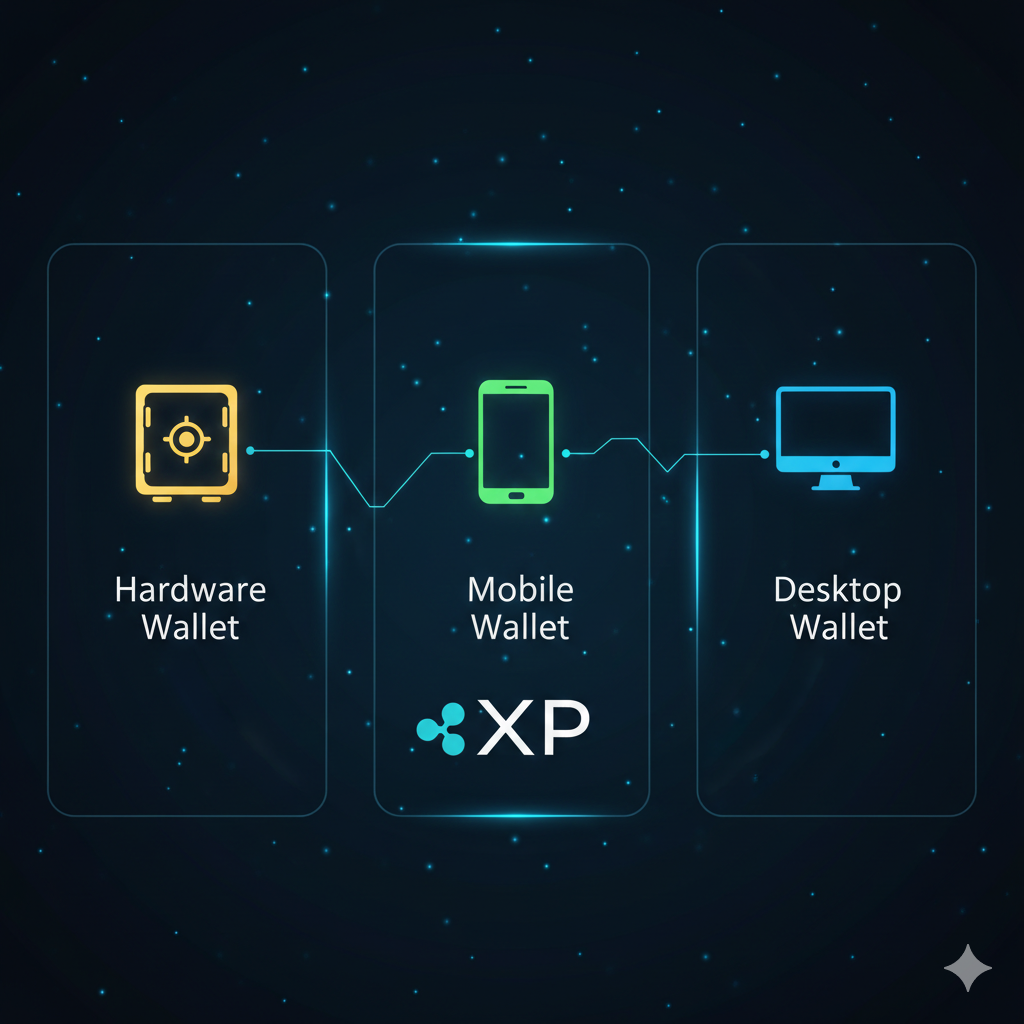
A wallet doesn't actually store coins; it stores the cryptographic keys that prove you own the coins on the blockchain. The difference between wallet types comes down to who holds that key: a corporation, or you.
Custodial Wallets (The Exchange Approach)
When you buy XRP on Coinbase or Binance and leave it there, you are using a custodial wallet. The exchange holds the massive master keys, and simply credits your account in their internal database.
Pros: Easy password resets, highly convenient for frequent trading, and immune to the user losing a seed phrase.
Cons: The exchange can freeze your account, get hacked, or go bankrupt (e.g., FTX, Celsius), taking your funds down with them.
Non-Custodial Wallets (Self-Sovereignty)
Using software like Xaman or a hardware device like a Ledger means only *you* have the mathematical code to move the funds.
Pros: Uncensorable, un-freezable, immune to exchange bankruptcies. You have true financial sovereignty.
Cons: Total personal responsibility. If you click a bad phishing link, or lose your seed phrase, no customer service agent can save you.
The Hybrid Approach
Most experts recommend a hybrid approach: keep 80-90% of your long-term wealth in cold, non-custodial storage, and keep 10-20% on heavily regulated custodial exchanges for liquidity, fast trading, and fiat off-ramping.