Avalanche occupies a specific niche: enterprise and institutional-grade blockchain infrastructure. Its sub-second finality (under 2 seconds), EVM compatibility, and customizable subnet architecture make it attractive for regulated financial use cases where traditional blockchains' finality times and privacy limitations are blockers.
Avalanche's Three-Chain Architecture
Avalanche's Three-Chain Architecture
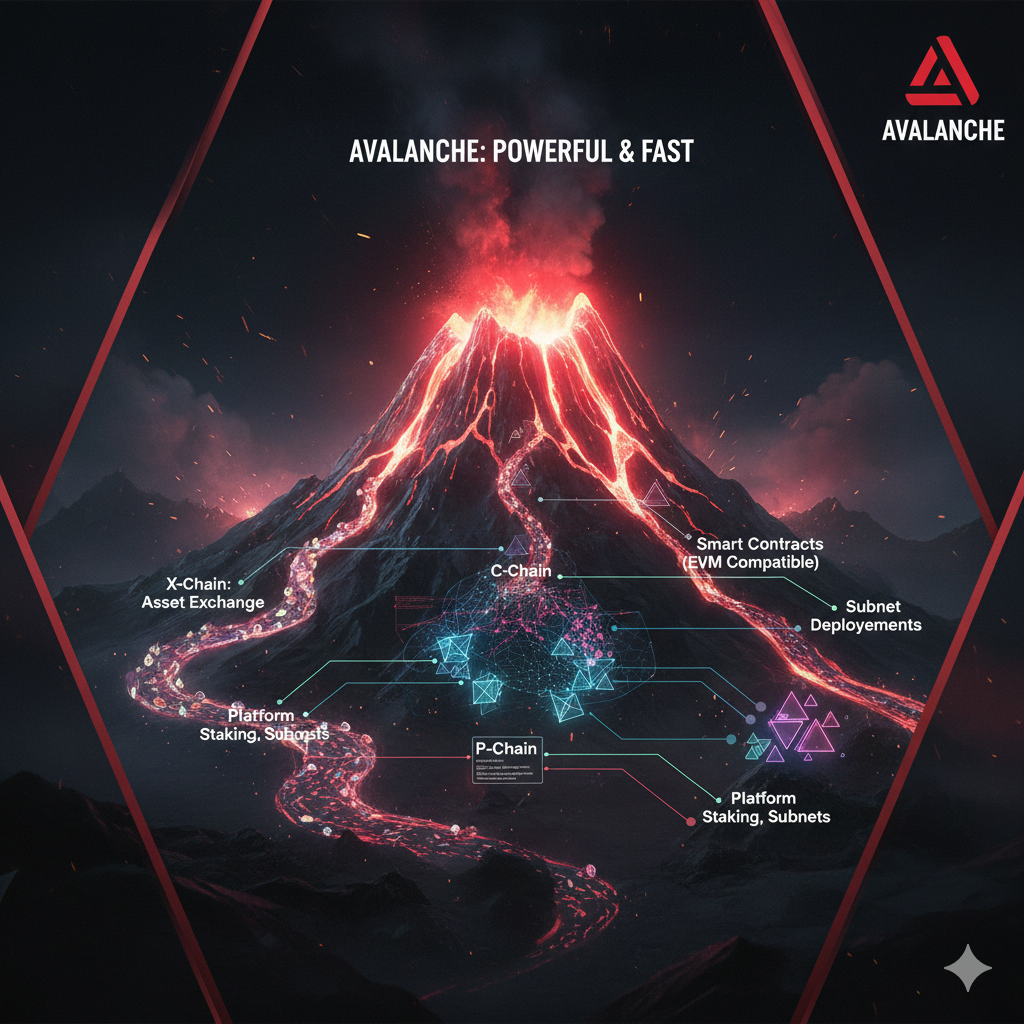
X-Chain: Asset Exchange Chain
Optimized for creating and exchanging assets using the Avalanche Virtual Machine. Not EVM-compatible but extremely fast for asset transfers and token creation. Native AVAX transfers occur here.
C-Chain: Ethereum-Compatible Contract Chain
EVM-compatible — all Ethereum contracts and tools work on the C-Chain with minimal modification. This is where Trader Joe, Platypus, and AAVE's Avalanche deployment operate. MetaMask connects to C-Chain identically to Ethereum.
P-Chain: Platform/Coordination Chain
Manages validator sets, staking, and subnet creation. Subnets are sovereign blockchains deployed on Avalanche infrastructure with programmable validator sets — enabling private or permissioned chains for institutional use cases.
Institutional Validation
Institutional Validation

- ✓JPMorgan Onyx Project explored Avalanche for institutional settlement
- ✓Deloitte selected Avalanche for Federal Emergency Management Agency disaster relief
- ✓Spruce subnet: regulated financial institution private blockchain on Avalanche
- ✓USDC, USDT, and EURC natively issued on C-Chain
- ✓Sub-2 second finality: faster than Visa settlement for many use cases
- ✓EVM compatibility: lowest migration cost path for Ethereum-based enterprises
Avalanche FAQs
Diversify Across Top Blockchain Investments
AVAX, XRP, ETH, and BTC — building exposure across multiple top-tier blockchains positions your portfolio for crypto's multi-chain future. Add XRP through daily cloud mining today.
Mine XRP Daily