
A Filipino nurse working in Dubai sends $500 home every month. With traditional wire transfer: $30-40 fee, 3-5 day wait, uncertain exchange rate applied at the bank's discretion. With XRP ODL: $0.05 fee, 3-5 second settlement, market rate applied transparently. For 1 billion remittance-dependent families worldwide, this difference is life-changing. The global remittance market sends $900 billion annually — and it's one of the most inefficient, extractive financial systems in existence.
The Broken State of Global Remittances
The Broken State of Global Remittances
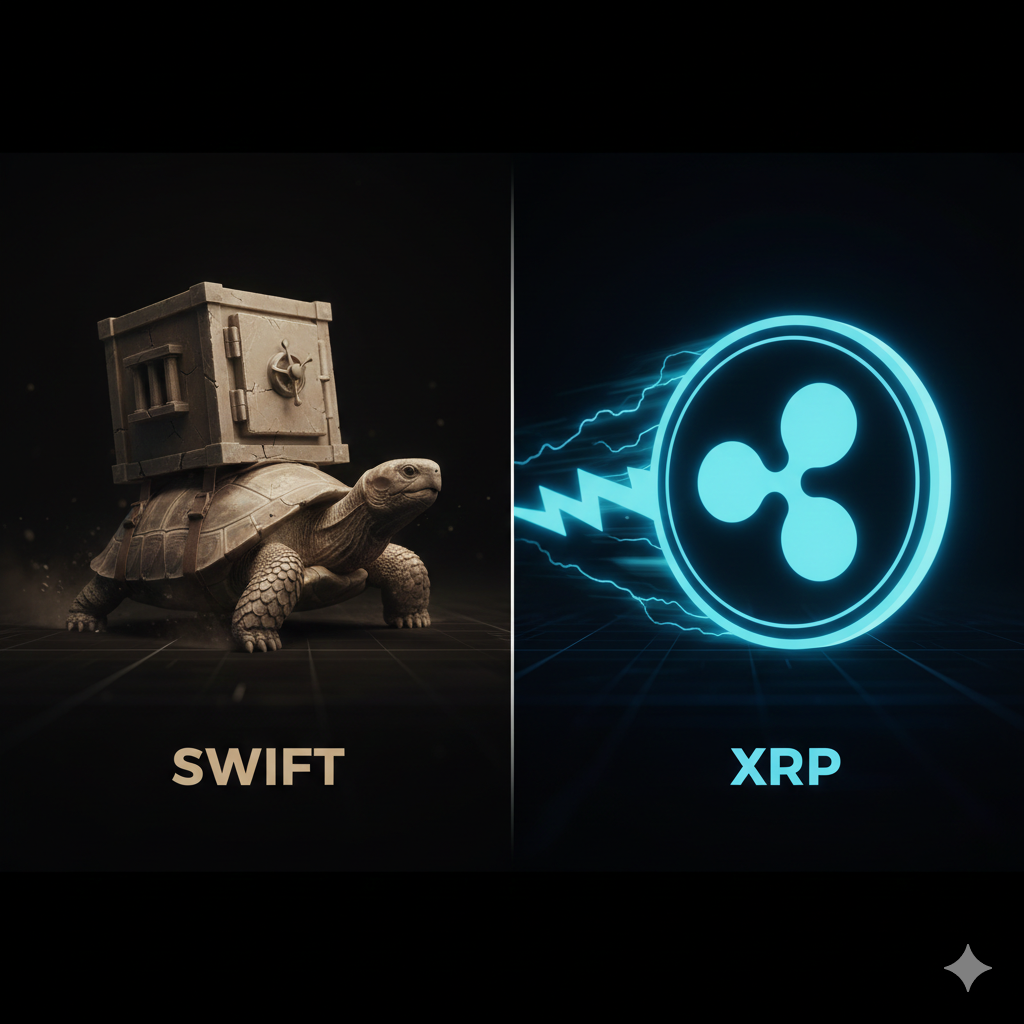
The World Bank SDG target is a maximum 3% cost for remittances by 2030. Despite a decade of pledges and hundreds of billions in fintech investment, global average remittance costs remain above 6%. The reason: the correspondent banking system — multiple banks passing money through chains of bilateral relationships with fees at each step — is fundamentally inefficient for the cross-border payment use case. It was designed in the 1970s for an era of batch processing, not real-time global money movement.
The human cost is enormous: the $70 billion wasted annually in remittance fees is money that doesn't reach families in developing nations who need it most. In the Philippines alone (the world's 5th largest remittance recipient at $40B/year), lowering fees from 6% to 1% would represent $2 billion more reaching Filipino families annually — enough to fund hospitals, schools, and small businesses that would otherwise depend on foreign aid.
The corridor-specific cost disparity is striking: sending money from the US to Mexico costs 5–6% through traditional channels. Sending from the US to sub-Saharan Africa costs 8–12%. The most expensive corridors serve the poorest recipients — a structural injustice baked into the correspondent banking system's cost architecture. XRP ODL fundamentally disrupts this structure by eliminating the need for pre-funded nostro/vostro accounts entirely.
How XRP ODL Works in Remittance Corridors
How XRP ODL Works in Remittance Corridors

On-Demand Liquidity (ODL) uses XRP as a bridge currency to eliminate the pre-funded accounts that traditional remittance requires. Traditional cross-border payments require banks to maintain 'nostro' accounts (accounts held at foreign banks) pre-loaded with local currency — expensive capital that earns no return while sitting idle. These nostro accounts collectively lock up trillions in idle capital globally.
The ODL mechanism: (1) Source currency (USD, AED, EUR) is used to purchase XRP on a local exchange. (2) XRP is sent across the XRPL in 3–5 seconds for $0.0001. (3) XRP is sold for destination currency (PHP, MXN, INR) on a local exchange at the destination. The entire sequence completes in under 30 seconds. No pre-funded accounts required. No correspondent bank relationships required. No 3-day settlement wait.
The cost advantage is profound. Traditional SWIFT wire: $25–$45 flat fee plus 1–3% FX markup. ODL: $0.05–$0.50 processing fee plus market-rate FX (typically 0.1–0.3% spread on crypto exchanges). For a $500 remittance, this is the difference between $30–$50 in fees vs $1–$2 — a 95%+ cost reduction. For families sending $500/month, that's $350–$600 additional income per year that stays in the family rather than going to intermediaries.
XRP ODL Corridor Performance
XRP ODL Corridor Performance

The US-Mexico corridor ($60B/year in remittances) is Ripple's most developed showcase. Bitso, Mexico's largest crypto exchange and primary ODL partner, now processes approximately $30–$50 million in daily ODL volume — making it one of the largest single crypto payment operators in Latin America. MoneyGram (before pausing its ODL partnership) briefly demonstrated the consumer model: retail customers sending money via MoneyGram's app had payments settled via XRP behind the scenes without the customer needing any crypto knowledge.
- ✓US → Mexico: world's busiest remittance corridor ($60B/year), Bitso handles ODL volume with >1M users
- ✓Japan → Asia: SBI Holdings (Japan's largest financial services company) is deepest ODL partner globally
- ✓Australia → Philippines/Asia: growing ODL corridor with competitive consumer pricing
- ✓UAE → India/Pakistan/Bangladesh: emerging corridor with enormous volume potential ($20B+/year)
- ✓EU → Africa: regulatory complexity creating first-mover opportunity for ODL entrants
- ✓2026 total ODL volume: estimated $20B+ monthly, with 90%+ cost savings vs SWIFT
Why Remittances Are Ripple's Strategic Moat
Why Remittances Are Ripple's Strategic Moat
Ripple's competitive moat is regulatory and relational, not just technological. Competitors like SWIFT GPI have improved settlement times to 24 hours (vs 3-5 days historically), but still can't match 3-5 second settlement with market-rate FX and $0.001 transaction costs. Stellar (XLM), Ripple's closest blockchain competitor for payments, lacks Ripple's institutional partnerships and ODL infrastructure.
More importantly, Ripple has spent 12+ years building banking relationships: 200+ financial institution partnerships, payment processing licenses in 55+ jurisdictions, and deep integration with compliance, risk, and operations teams at partner banks. This regulatory and relational infrastructure is not replicable quickly by new entrants — each license takes 12–36 months to obtain, and banking relationships require years of trust building.
The network effect compounds: each new ODL corridor makes XRP more liquid and more useful as a bridge asset. More corridors = deeper XRP order books on exchanges in those corridors = tighter spreads = lower costs = more competitive product = more corridors. This self-reinforcing flywheel gives established ODL corridors a natural incumbency advantage against any new entrant attempting to replicate the model.
XRP Remittance FAQs
Own a Piece of the Remittance Revolution
Every XRP held represents ownership of the asset powering the most efficient cross-border payment network on Earth. Accumulate XRP daily through MineXrpOnline while the remittance revolution captures an increasingly large slice of a $900B market.
Start Accumulating Remittance-Powered XRP