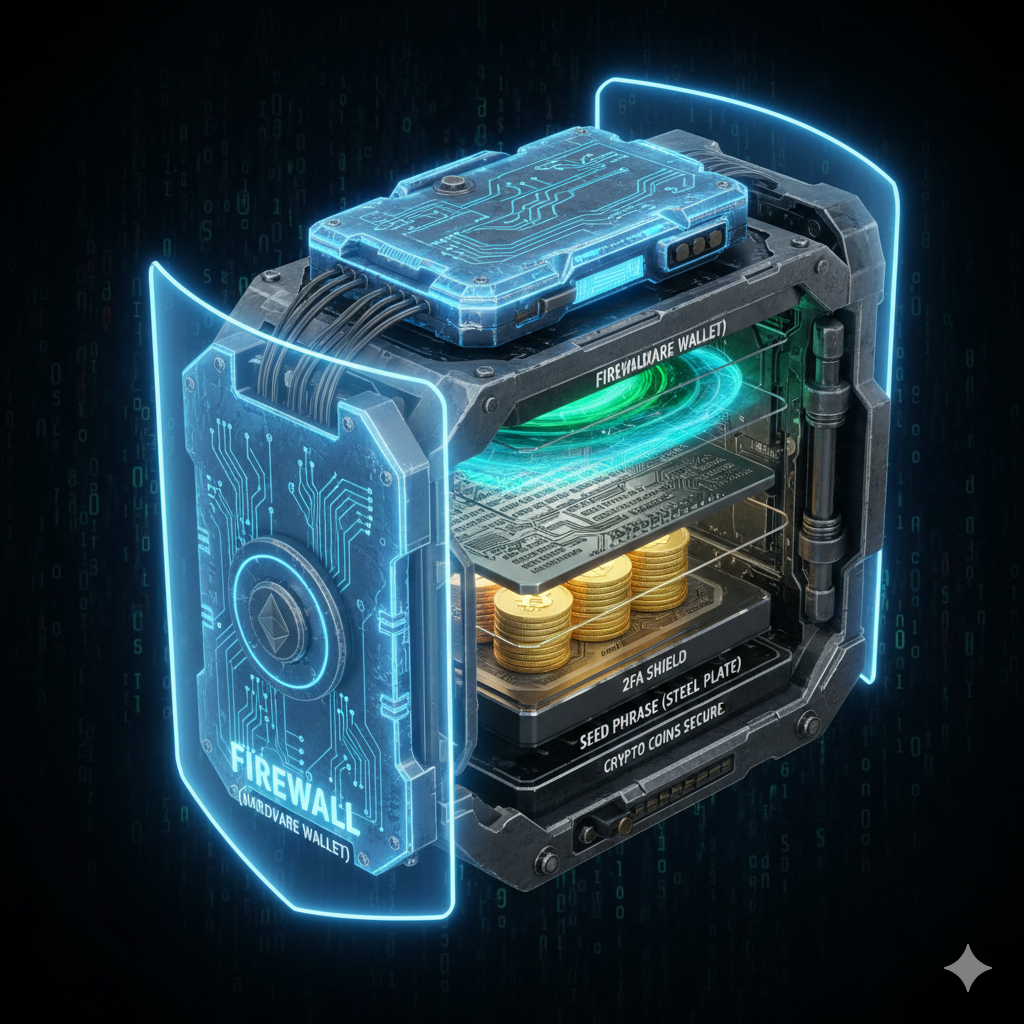
The theoretical 'Q-Day'—the day a quantum computer becomes powerful enough to break standard public-key cryptography (like RSA and ECC) using Shor's Algorithm—has been a looming shadow over the crypto industry for a decade.
How Real is the Threat?
Currently, breaking Bitcoin's Elliptic Curve Digital Signature Algorithm (ECDSA) would require millions of stable, error-corrected qubits. The most advanced quantum computers today have roughly 1,000 highly unstable physical qubits. 'Q-Day' is likely still 10 to 15 years away.
The Fix: Post-Quantum Cryptography
The crypto industry is not sitting still. The National Institute of Standards and Technology (NIST) has already finalized post-quantum encryption standards. Because blockchains operate on consensus, if a true quantum threat emerges, developers (like Bitcoin Core or Ripplex) will simply initiate a 'hard fork' to migrate the network to quantum-resistant signatures.
Your old Bitcoin will still be safe, assuming you move it into a new, quantum-secure wallet format before the old encryption breaks.