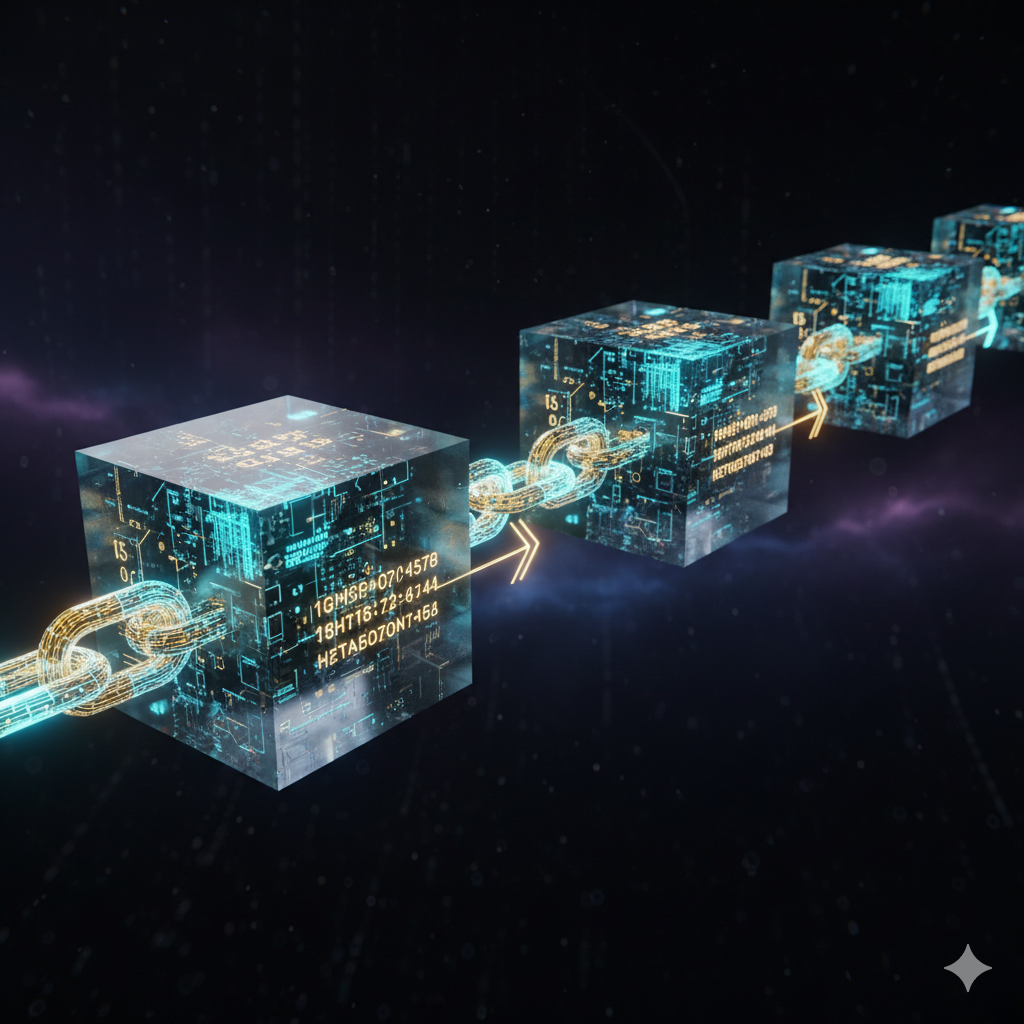
Blockchains are deterministic, isolated systems — a smart contract executing on Ethereum cannot 'look up' the current price of ETH/USD or whether a flight was delayed. This 'oracle problem' means blockchain applications would be limited to on-chain data only without external data feeds. Chainlink solves this by providing a decentralized oracle network: a network of independent node operators that retrieve, validate, and deliver off-chain data to on-chain smart contracts.
The Oracle Problem and How Chainlink Solves It
A smart contract can't simply query an API because blockchain nodes worldwide must independently arrive at the same result for consensus. If a contract called api.coinbase.com for the ETH price, different nodes might get different results (API latency, downtime, manipulation) — breaking consensus. Oracles provide a single, agreed-upon value by aggregating multiple data sources and validating the result before delivering it on-chain.
Chainlink uses a Decentralized Oracle Network (DON): multiple independent node operators each retrieve data from multiple sources, aggregate their results independently, and report on-chain. A deviation threshold (e.g., ±0.5% for most price feeds) or a heartbeat interval (update regardless of deviation if N seconds have passed) triggers an on-chain update.
Node operators stake LINK tokens as collateral. Misbehavior (reporting false data) results in slashing (losing staked LINK). This economic incentive aligns node operators with honest reporting. The more LINK staked, the more cryptoeconomic security the network provides.
- ✓Oracle problem: smart contracts cannot access off-chain data natively
- ✓DON: Decentralized Oracle Network — multiple nodes, multiple sources, aggregated result
- ✓Deviation threshold: feed updates when price moves ±0.5% (configurable)
- ✓Heartbeat: feed updates at minimum every N seconds regardless of deviation
- ✓LINK staking: node operators stake LINK as collateral for honest reporting
- ✓Slashing: dishonest reporting results in loss of staked LINK
Chainlink Price Feeds: The DeFi Foundation
Chainlink Price Feeds are the most used oracle service — they power lending protocols (Aave, Compound), DEXes, synthetic asset platforms, and stablecoins. A Price Feed is an on-chain smart contract that stores the latest validated price for an asset pair (e.g., ETH/USD, BTC/USD, XRP/USD). DeFi protocols read from these feeds instead of implementing their own price discovery.
As of 2026, Chainlink operates 1,000+ price feeds across 18+ blockchains. The ETH/USD feed aggregates data from 21 independent node operators, each pulling from multiple premium data providers (Kaiko, CoinMetrics, CFGI). The final aggregated price achieves significant manipulation resistance because an attacker would need to compromise a majority of professional data providers and nodes simultaneously.
Price feed manipulation was responsible for several major DeFi exploits before Chainlink was widely adopted. The Mango Markets exploit ($116M), bZx flash loan attacks, and others exploited single-source price oracles. Projects using Chainlink's multi-source aggregated feeds have dramatically reduced this attack vector.
- ✓1,000+ price feeds across 18+ blockchains in 2026
- ✓ETH/USD: 21 node operators × multiple data providers = manipulation resistant
- ✓TWAP alternative: some DEXes use time-weighted average prices from their own liquidity
- ✓Chainlink vs Pyth: Chainlink slower/more decentralized; Pyth faster/fewer sources
- ✓Feed monitoring: data.chain.link shows all feeds, sources, and last update
- ✓Security: most DeFi hacks involving oracles used single-source feeds, not Chainlink
Chainlink VRF: Verifiable Randomness for Gaming and NFTs
Blockchains are deterministic — there's no true randomness. Using block hashes or timestamps as random numbers is easily manipulated by miners/validators. Chainlink VRF (Verifiable Random Function) provides cryptographically provable random numbers to smart contracts.
How it works: a smart contract requests randomness. Chainlink nodes generate a random number with a cryptographic proof that the result was determined by their private key and a seed that didn't exist before the request was made. The proof is verified on-chain before the random number is used — it's mathematically impossible to predict or manipulate.
VRF is used for NFT trait assignment (ensuring fair distribution of rare attributes), blockchain gaming (determining game outcomes, loot drops), lottery protocols (provably fair draws), and DAO governance (random jury selection). Major projects using Chainlink VRF include Axie Infinity, Aavegotchi, and numerous NFT collections.
- ✓VRF: Verifiable Random Function — provably unpredictable random numbers on-chain
- ✓Use cases: NFT rarity rolls, game outcomes, lottery draws, random selection
- ✓Proof on-chain: smart contract verifies the proof before accepting the random value
- ✓Cannot be manipulated: generation uses a secret key + seed that didn't exist at request time
- ✓VRF v2 Plus: newer version with improved efficiency and subscription billing
- ✓Cost: paid in LINK or native token per random number request
Chainlink CCIP: Cross-Chain Interoperability Protocol
Chainlink CCIP (Cross-Chain Interoperability Protocol) is Chainlink's infrastructure for secure cross-chain messaging and token transfers. Unlike standalone bridge protocols, CCIP uses Chainlink's existing DON infrastructure and adds a Risk Management Network — a separate, independent network that monitors CCIP transactions and can halt messages if anomalous activity is detected.
CCIP enables: token transfers across chains (native tokens or wrapped), arbitrary message passing (smart contract to smart contract calls across chains), and programmable token transfers (transfer + execute on destination in one step). It's designed to be the enterprise-grade standard for cross-chain communication.
Major banks and financial institutions have explored CCIP for institutional DeFi. Swift, DTCC, and major banks have conducted CCIP pilots for cross-chain settlement of tokenized assets. This positions Chainlink at the center of institutional blockchain adoption.
- ✓CCIP: secure cross-chain messaging and token transfers
- ✓Risk Management Network: independent monitoring layer that can halt suspicious CCIP transactions
- ✓Programmable transfers: transfer + execute smart contract call in one cross-chain transaction
- ✓Enterprise adoption: Swift, DTCC pilots using CCIP for institutional settlement
- ✓Lane system: CCIP uses configured 'lanes' between chain pairs, enabling rate limiting
- ✓Security model: multiple independent DONs + Risk Management Network
Frequently Asked Questions About Chainlink
Blockchain Infrastructure Powers the Future of Finance
Chainlink proves that blockchain technology needs reliable, decentralized infrastructure to reach its full potential. XRP is built on similar principles — fast, reliable, and decentralized settlement. Earn XRP through MineXrpOnline's cloud mining as you learn more about the ecosystem.
Start Earning XRP