The oracle problem: blockchains are deterministic, isolated systems — they cannot natively access external data. A DeFi lending protocol needs to know ETH's current price to calculate collateral ratios. A crop insurance smart contract needs verified weather data. Chainlink's decentralized oracle network provides this critical infrastructure.
How Chainlink Oracles Work
How Chainlink Oracles Work
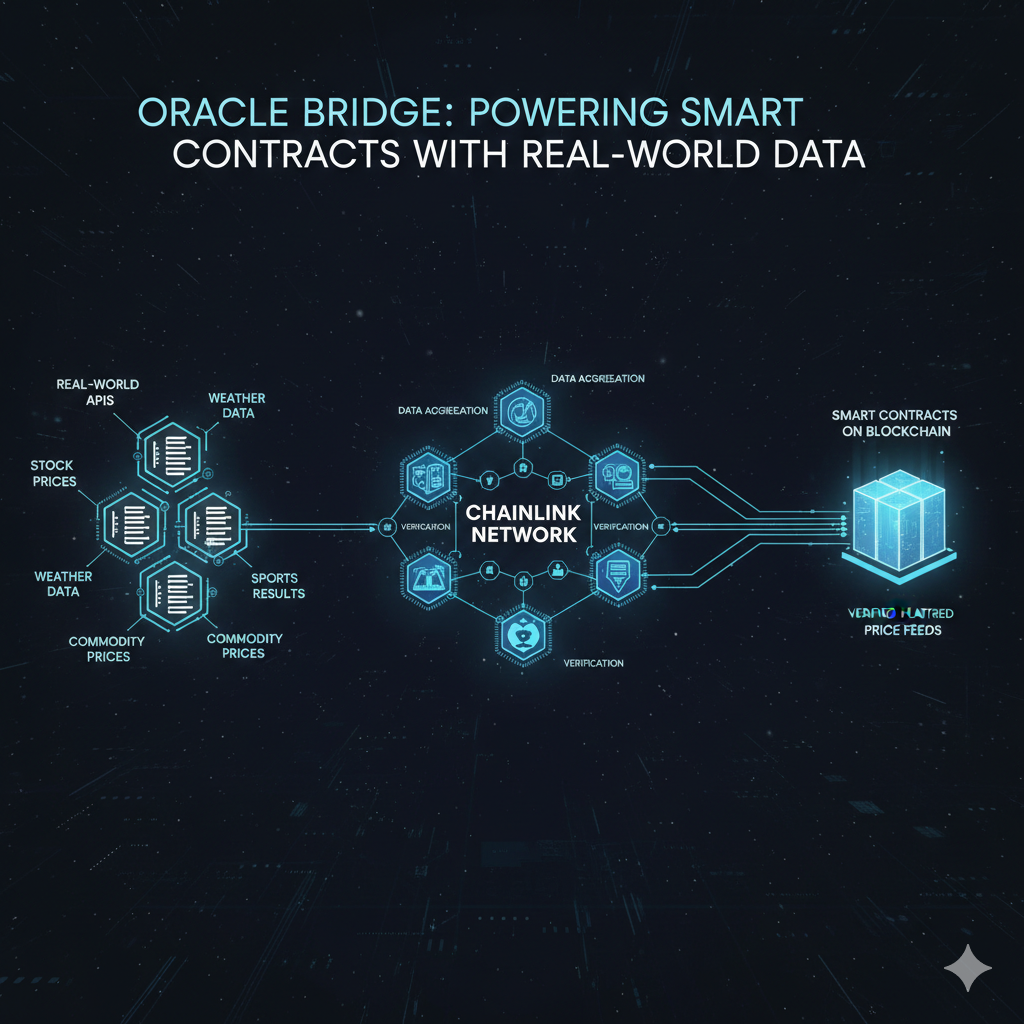
Decentralized Aggregation
Rather than trusting a single data source, Chainlink aggregates data from multiple independent node operators who independently fetch from multiple sources. The median of all reported values is used, making manipulation of the feed require corrupting a large majority of the independent nodes simultaneously — economically prohibitive.
LINK Token Mechanics
Node operators stake LINK tokens as collateral. If they provide incorrect data, their stake is slashed (destroyed). This cryptoeconomic security mechanism aligns node incentives with accuracy. DeFi protocols pay LINK to access oracle feeds, creating sustained demand for the LINK token proportional to the breadth of DeFi adoption.
Chainlink's Expanding Ecosystem
Chainlink's Expanding Ecosystem

- ✓Price Feeds: used by every major DeFi protocol for collateral valuation
- ✓VRF (Verifiable Random Function): provably fair randomness for gaming and NFTs
- ✓CCIP (Cross-Chain Interoperability Protocol): secure cross-chain message passing
- ✓Data Streams: sub-second latency price data for derivatives protocols
- ✓Proof of Reserve: verifying that wBTC, USDC, and tokenized assets have backing
- ✓Real-World Assets (RWA) tokenization: enabling tokenized bonds, commodities, equities
Chainlink FAQs
Participate in the Growing Crypto Infrastructure
Oracle networks, payment rails, and smart contract platforms are all building the financial infrastructure of the future. Position in XRP through daily mining and participate in this growth from day one.
Start Your XRP Position