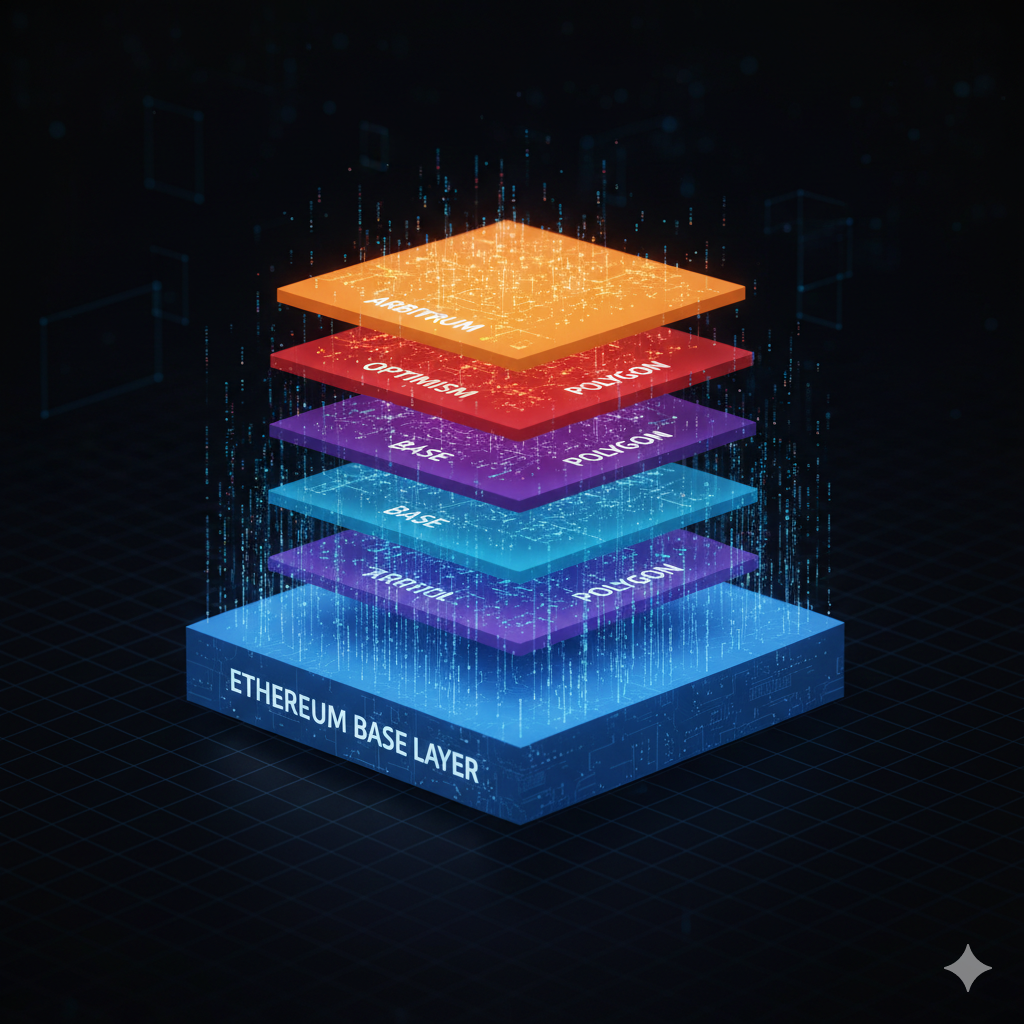
Ethereum's main bottleneck: all nodes must download and process all transaction data. This limits throughput. Rollups helped by moving execution off-chain, but rollups still need to post their transaction data somewhere for security (so anyone can verify). Ethereum calldata/blobs are the current destination, but they're still relatively expensive. Celestia offers a specialized alternative: post your rollup data to Celestia instead, paying a fraction of Ethereum's data cost, while using Ethereum for settlement security.
Data Availability: The Core Problem
Data availability (DA) is one of blockchain's most subtle challenges. For a rollup to be trustless, anyone must be able to download the rollup's transaction data and independently verify the state transitions. If the rollup operator publishes state updates but withholds the underlying transaction data, users could be trapped with no way to exit.
Celestia's solution: be excellent at data availability and nothing else. Celestia validators don't execute transactions — they only verify that data was published. They use 'data availability sampling' (DAS) — each light node downloads small random samples of each block. Statistically, if 75%+ of samples are available, the full block data is available. This allows nodes to verify DA without downloading full blocks, enabling huge block sizes with low hardware requirements.
Erasure coding: Celestia extends each block with redundant data using Reed-Solomon coding. Even if 50% of a block is missing, the full original data can be recovered. Combined with DAS, Celestia can offer strong DA guarantees with extremely light verification requirements — enabling thousands of TPS of DA throughput.
- ✓Data availability (DA): proving that data was published, not just that state is correct
- ✓Data availability sampling: light nodes verify DA by sampling small block portions
- ✓Erasure coding: Reed-Solomon redundancy allows recovery from 50% data loss
- ✓No execution: Celestia validators don't process transactions — only check DA
- ✓Massive block sizes: DAS enables 8MB+ blocks with light verification
- ✓Rollup integration: rollups post tx data to Celestia instead of expensive L1
TIA Token and the Celestia Ecosystem
TIA launched in October 2023 via an airdrop to Ethereum developers, rollup users, Cosmos ecosystem participants, and early Celestia testnet participants. The airdrop was broadly well-received — one of 2023's most significant. TIA is the native token of Celestia, used to pay for blob transactions (rollups posting data) and as staking collateral for validators.
Celestia's fee market: rollups pay in TIA per byte of data posted. As more rollups adopt Celestia as a DA layer, TIA demand for fees grows. Validators and delegators earn TIA staking rewards + fee revenue. The token has a classic 'get paid to secure, earn from fee revenue' model.
Rollup adoption: several major rollup projects announced Celestia integration. Eclipse (Ethereum settlement + Solana execution + Celestia DA) was a flagship example of the modular stack in action. Manta Network, dYmension, and other Cosmos-based rollup frameworks use Celestia. The 'celestia roadmap' for Ethereum rollups (OP Celestia, Arbitrum Celestia) allows rollups to switch DA layers.
- ✓TIA airdrop (Oct 2023): Ethereum devs, Cosmos users, rollup participants
- ✓TIA utility: blob transaction fees + validator staking collateral
- ✓Fee model: rollups pay TIA per byte of data posted to Celestia
- ✓Staking rewards: validators earn TIA + fee revenue from rollup data
- ✓Eclipse: flagship modular stack — Ethereum settlement + Solana VM + Celestia DA
- ✓DA alternatives to Ethereum: Celestia competes with EigenLayer DA, Avail, and ETH blobs
Frequently Asked Questions About Celestia
The Modular Web3 Needs Scalable Payments
Celestia makes blockchain data cheaper. XRP makes payments cheaper. Together they represent the infrastructure vision of an accessible, scalable decentralized economy. Earn XRP through cloud mining today.
Join MineXrpOnline