In 2016, Walmart partnered with IBM Food Trust to test blockchain food tracking. When food contamination investigations previously took days of manual record-checking, blockchain reduced the trace time from 7 days to 2.2 seconds. This single case study demonstrated blockchain's transformative potential for supply chain management.
Why Blockchain Solves Supply Chain Problems
Why Blockchain Solves Supply Chain Problems
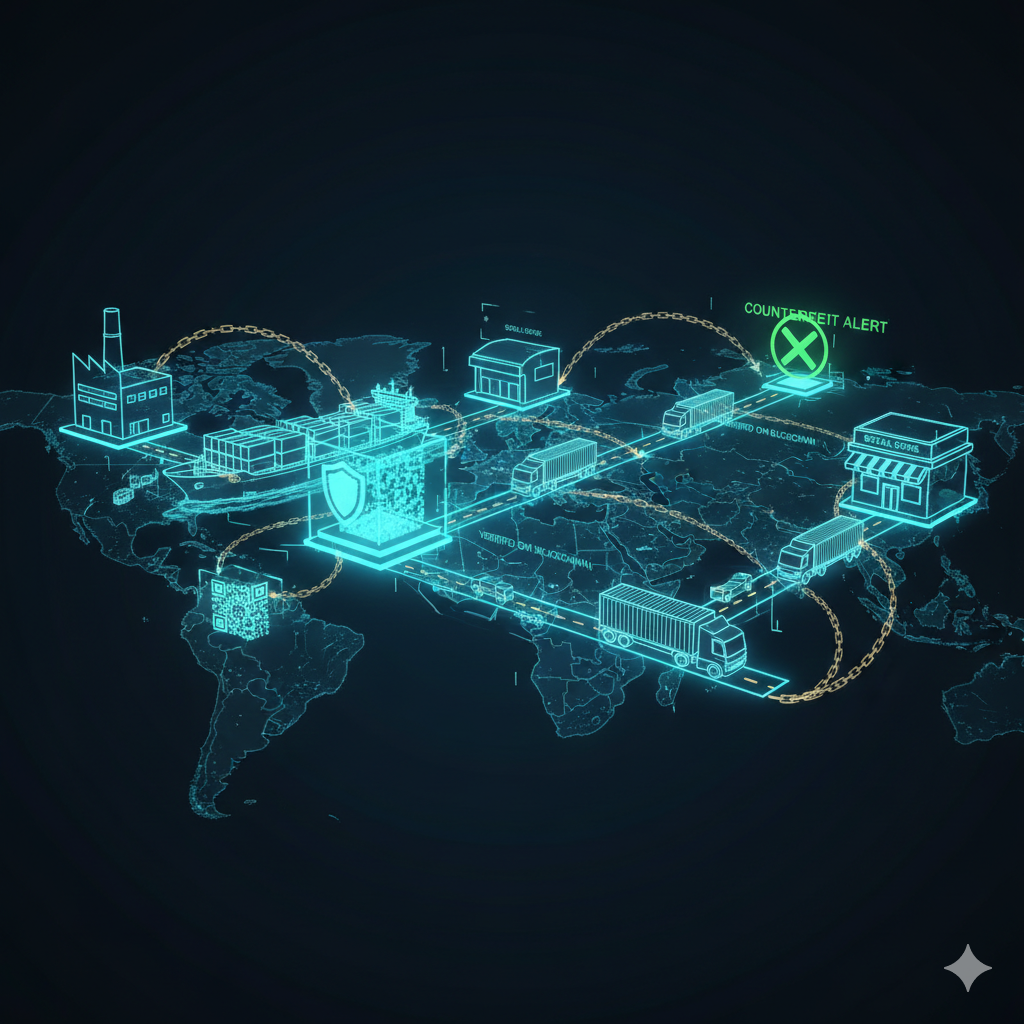
Traditional supply chains rely on a patchwork of incompatible databases held by different entities — manufacturers, shippers, customs, distributors, retailers. Each party maintains their own records with no guaranteed synchronization. Disputes require manual reconciliation; counterfeiting thrives in data gaps; contamination tracing is slow and error-prone.
Blockchain's shared ledger model gives every participant read access to the same record — immutably timestamped and cryptographically signed. When a shipment event is recorded, it cannot be altered by any party. The entire history of any product is permanently and provably recorded.
Real Blockchain Supply Chain Deployments
Real Blockchain Supply Chain Deployments

- ✓IBM Food Trust: Walmart, Dole, Nestlé, Kroger — food safety tracking at retail scale
- ✓TradeLens (Maersk + IBM): global shipping documentation on blockchain
- ✓De Beers Tracr: diamond ethical sourcing and authenticity certificate on blockchain
- ✓Everledger: luxury goods (handbags, watches) provenance tracking for insurance
- ✓VeChain: supply chain blockchain used by BMW, Walmart China, DNV GL
- ✓XRPL potential: XRP Ledger's token issuance and fast settlement suited for supply chain token creation
Blockchain Supply Chain FAQs
Invest in the Blockchain Future Through XRP
As blockchain touches more industries — finance, supply chain, CBDCs, DeFi — XRP's place in global financial infrastructure grows. Accumulate XRP daily through MineXrpOnline while the blockchain revolution continues.
Build Your XRP Position