The freedom of self-custodial Bitcoin comes with responsibility. Unlike a bank account, there is no 'forgot password' option and no insurance on most exchange balances. Over $3 billion in Bitcoin was stolen or lost in 2023 alone — and the vast majority of those losses were preventable with proper security practices. Understanding Bitcoin security is not optional for serious investors — it is the difference between keeping and losing your funds.
The Security Pyramid: Layered Defense
The Security Pyramid: Layered Defense
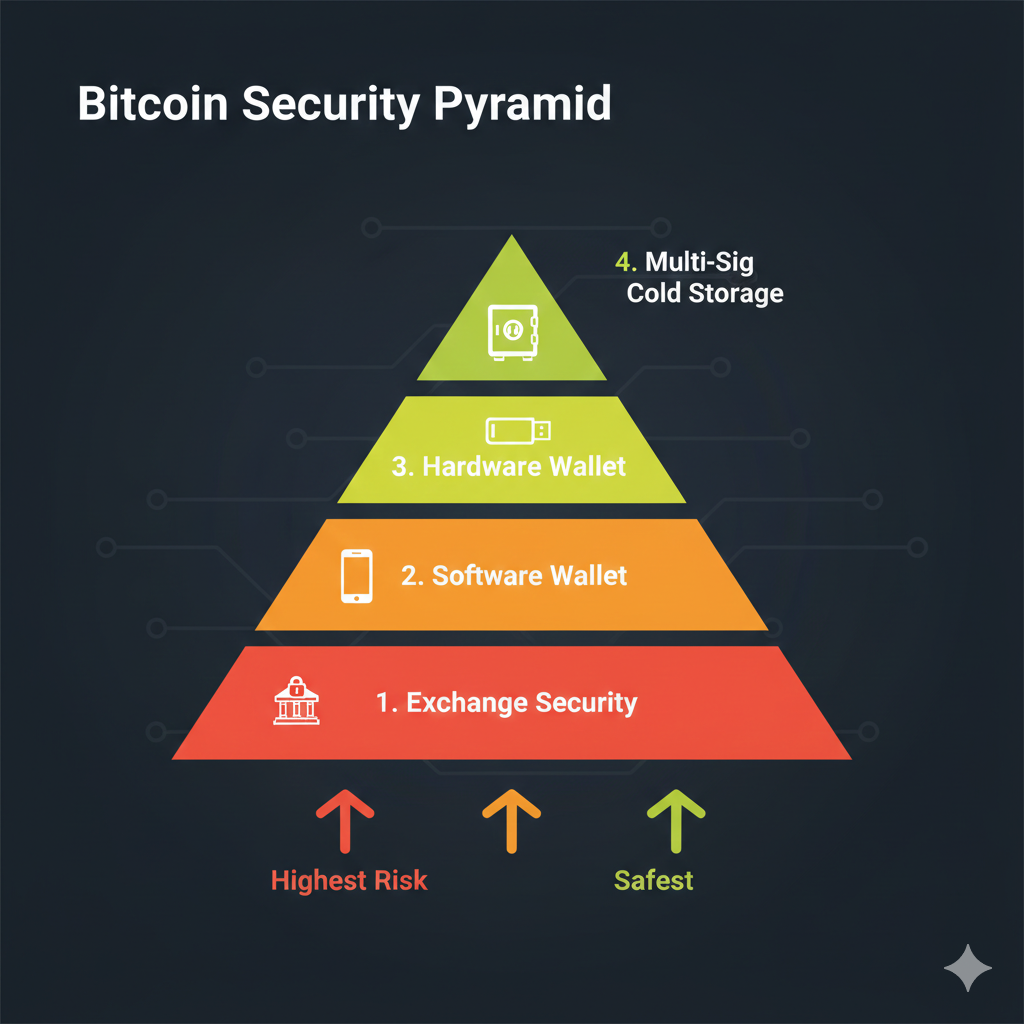
Think of Bitcoin security as a pyramid of increasing protection — each layer more secure than the one below, but each requiring more effort or cost. The appropriate layer depends on the amount of Bitcoin you hold and how frequently you need to access it. Most people spread their holdings across multiple layers based on purpose: spending vs. long-term storage.
The fundamental principle: assets you don't need frequent access to should be stored with maximum security (hardware wallets, multisig). Assets you use regularly can stay more accessible (software wallets, small exchange balances). Never keep significant holdings in a single location — geographic and format diversification are both important.
Layer 1: Exchange Security (Minimum)
If you must keep BTC on an exchange: use a unique, strong password (password manager recommended), enable hardware 2FA (not SMS — SIM swap attacks make SMS 2FA dangerous), whitelist withdrawal addresses, and only use regulated exchanges with proof-of-reserves audits. Regulated U.S. exchanges (Coinbase, Kraken, Gemini) provide FDIC insurance on fiat balances but not crypto balances.
Layer 2: Software Wallet (Intermediate)
Apps like Exodus, BlueWallet, or Electrum store your keys locally on your device. Better than exchanges since you control the keys, but vulnerable to device compromise through malware, phishing, or physical theft. Use software wallets for amounts you'd carry in a physical wallet — $500 or less — not for your primary savings. Always back up the seed phrase immediately after setup.
Layer 3: Hardware Wallet (Recommended)
Ledger Nano X, Trezor Model T, and Coldcard devices store private keys in an offline certified secure element chip. Even if your computer is fully infected with sophisticated malware, transaction signing still requires physical confirmation on the device. This is the security standard for anyone holding $1,000+ in crypto. Price: $70–$250 — a tiny fraction of the value they protect.
Layer 4: Multisig Cold Storage (Advanced)
For holdings above $10,000, consider a multi-signature setup requiring 2-of-3 or 3-of-5 hardware wallets to sign any transaction. Single points of failure are eliminated entirely. Unchained Capital and Casa offer institutional-grade concierge multisig services with professional key storage. This is the same architecture used by institutional Bitcoin treasuries.
The Cardinal Rule: Seed Phrase Security
The Cardinal Rule: Seed Phrase Security
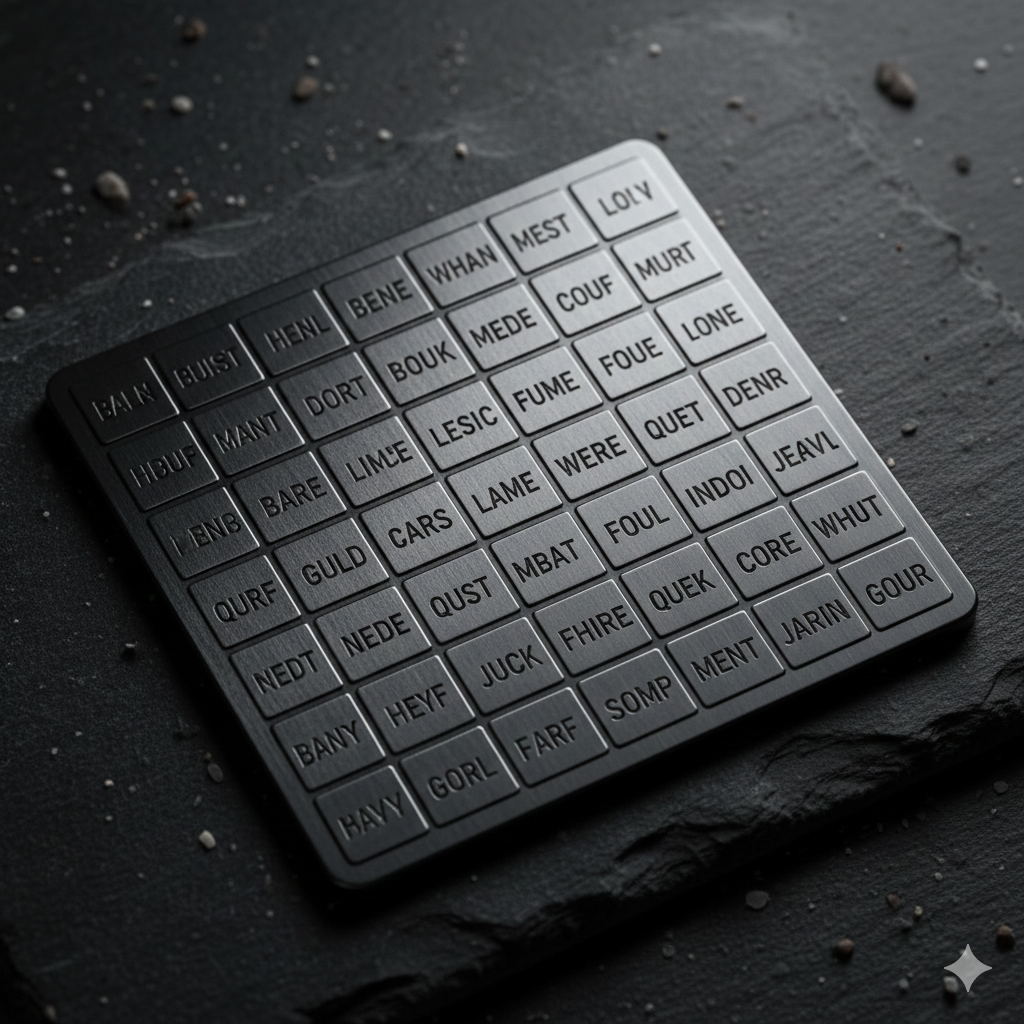
Your seed phrase (12 or 24 words) is the master key to all your cryptocurrency — every wallet derived from it. Anyone with your seed phrase has complete, irreversible control over all assets. This makes seed phrase storage the single most critical security decision you make. The most sophisticated hardware wallet provides zero protection if your seed phrase is stored in your email or phone.
Metal backup plates (Cryptosteel, Hodlr Swiss, Bilodl) resist house fires, floods, and physical degradation. Paper degrades and burns. A steel backup stored in a separate location from your hardware wallet means neither location alone can compromise your funds — both would need to be breached simultaneously. This geographic separation is the backbone of professional Bitcoin custody.
- ✓NEVER store your seed phrase digitally (no photos, emails, notes apps, cloud storage)
- ✓Write it on paper immediately upon wallet creation — then verify it works
- ✓Also create a metal backup plate (Cryptosteel, Bilodl) for fire/flood/water resistance
- ✓Store in two physically separate secure locations (home safe + bank safe deposit box)
- ✓Never share your seed phrase with anyone — no legitimate service will ever ask for it
- ✓Test your backup by recovering your wallet before adding significant funds
- ✓Use BIP-39 passphrase (25th word) for an additional layer of protection against physical theft
The Most Common Bitcoin Attack Vectors in 2026
The Most Common Bitcoin Attack Vectors in 2026
Phishing remains the dominant attack vector: fake hardware wallet websites, fake wallet apps on app stores, and fake exchange support pages steal seed phrases directly. Always navigate to ledger.com or trezor.io by typing the URL manually — never through links in emails, Discord messages, or social media. Ledger's 2020 database breach exposed 270,000 customer names and addresses, which were subsequently used in sophisticated targeted phishing campaigns.
Clipboard hijacking malware silently monitors your clipboard and replaces copied cryptocurrency addresses with the attacker's address. A single paste operation without verification sends funds to an irretrievable address. Prevention: always verify the first 4 and last 4 characters of any address before sending. Hardware wallets display the receiving address on their secure screen — use this verification every time.
SIM swap attacks allow attackers to take over your phone number by social engineering your mobile carrier, then use it to bypass SMS-based 2FA. This has been used to steal millions from crypto accounts. Solutions: switch all crypto accounts from SMS 2FA to hardware security keys (YubiKey) or authenticator apps (Google Authenticator, Authy) as a minimum, and hardware keys (FIDO2) as optimal.
Operational Security (OpSec) Best Practices
Operational Security (OpSec) Best Practices
Use a dedicated email address exclusively for cryptocurrency accounts — not linked to your real name, not used for social media, not shared with any other service. If this email is compromised, attackers can only access crypto accounts, not your identity. Use a password manager (Bitwarden, 1Password) to generate and store unique, complex passwords for every account.
Consider a separate device (a basic used laptop) exclusively for cryptocurrency transactions. No general browsing, no email, no social media. This 'cold computer' approach dramatically reduces exposure to browser-based malware and drive-by download attacks. High-value Bitcoin holders routinely use air-gapped computers (never connected to the internet) for signing large transactions.
Privacy on-chain matters too: Bitcoin transactions are public and traceable. Using a new receiving address for each transaction and avoiding address reuse prevents amount correlation. Consider CoinJoin services (Wasabi Wallet, Samourai Wallet's Whirlpool) for significant holdings to break transaction graph analysis. Most casual investors don't need this level of on-chain privacy, but it's important for large amounts.
Bitcoin Security FAQs
Security Applies to All Your Crypto Assets
Whether you're mining XRP on MineXrpOnline or buying Bitcoin on an exchange, apply these security practices to all your crypto holdings. Your future self will thank you.
Start Mining Securely